
Contents11 sections
I remember the first cycle I took like it was yesterday.
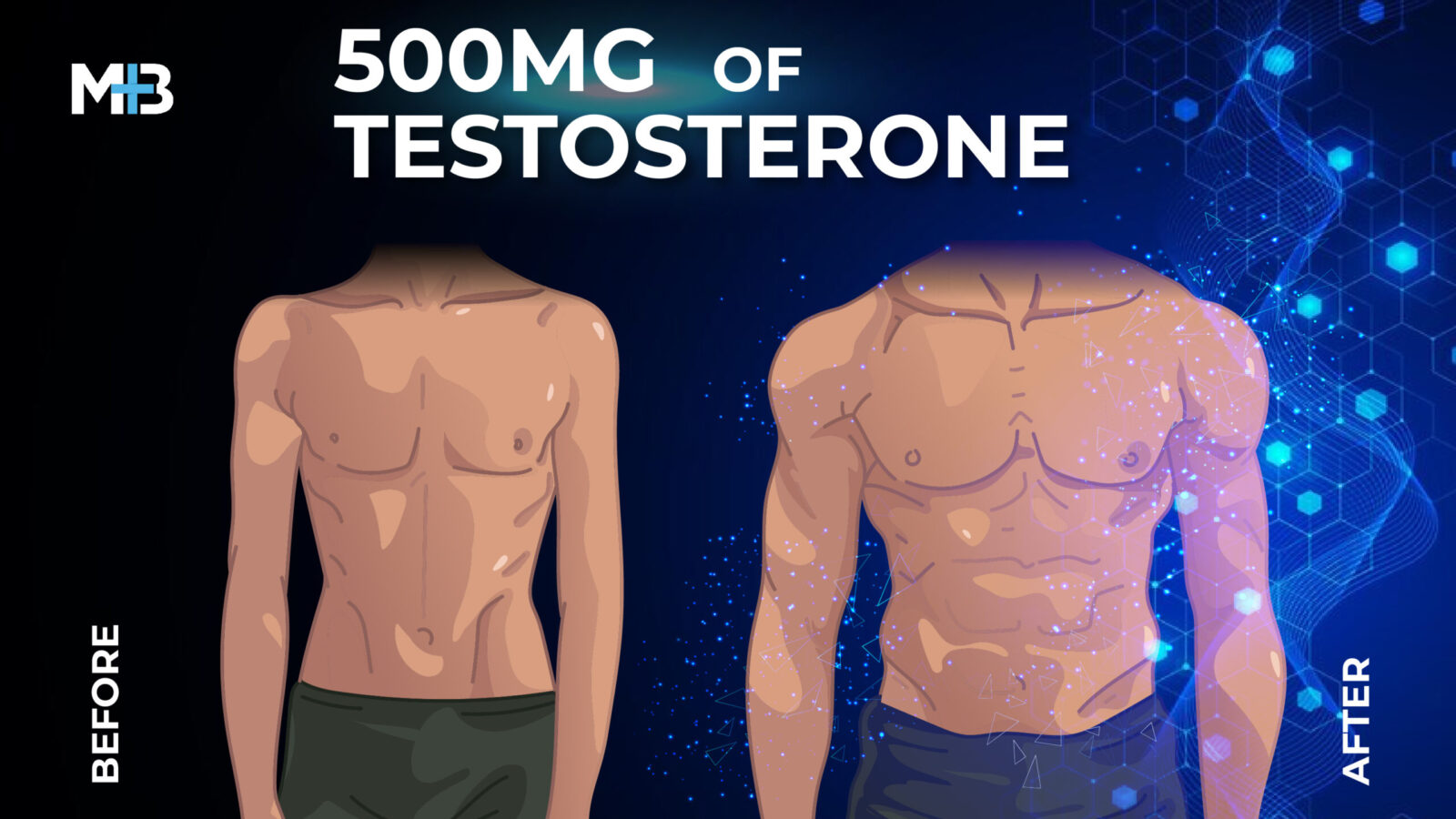
My gym buddy and I both took the same dose of 500mg of testosterone a week, ate the same diet, and trained the same, but our results were anything but the same. I blew up, but he looked like a totally different man at the end of that cycle.
Anytime I up my TRT from 180 mg to 500 mg weekly or beyond, I’m playing with a balance between performance and longevity. Blood pressure might creep up 5-10 points (manageable with proper supplementation or ancillaries), and estrogen always goes beyond the high-normal range for me (I’m a high aromatizer), but the mirror always shows gains that 180 mg simply can’t deliver. How each body reacts to testosterone varies greatly; factors like body weight, genetics, age, and metabolism all play a role.
Let’s get into how to find the right dose for you and your needs.
The information on this site is for educational and informational purposes only, and is not medical advice. Always consult a qualified healthcare professional before using any supplement or medication, or making changes to your health, fitness, or nutrition routine.
Key Takeaways
- Genetic variations dramatically affect how individuals respond to 500mg of testosterone per week.
- The dosage amount and treatment effectiveness of 500mg of testosterone depend heavily on the current body weight of the individual.
- The various testosterone esters produce distinct patterns of drug release and duration of action.
- The serum concentration levels differ substantially among people who receive the same dose of testosterone.
- Medical supervision is critical for optimizing results and minimizing health risks.
Exogenous Testosterone Administration and Serum Concentration

Testosterone enanthate provides sustained release through its 7-carbon ester chain. At 500mg weekly, it produces serum concentrations 4-6 times above natural levels (with enormous individual variation, of course).
Higher doses create supraphysiological concentrations driving significant anabolic effects while increasing risk of water retention, elevated blood pressure, and estrogen conversion. My first experience with 500mg showed dramatic strength gains (My bench press went from 275 for 6 reps to 12 reps within a matter of 4 weeks), but estrogen management became much more complex and always does when I up my dose.
Genetic Variation and Bioavailability
Here’s the thing, if you go to a standard doc and tell them you are experiencing low testosterone symptoms, they are going to treat you like the rest of the population bell curve and give you that standard dose. A bell curve where the median is sick, overweight, and has no desire to be at the top of their game. If you want superior results, you may need to take things into your own hands.
Wonder why some guys blow up on minimal doses while others need more? The answer lies in genetics.
Variation in the phosphodiesterase PDE7B gene impacts testosterone metabolism efficiency. Certain polymorphisms lead to faster clearance, requiring higher doses for the same effect.
The Organic Anion Issue
The organic anion transporting polypeptide encoded by SLCO2B1 is another critical factor. Mutations in this region can decrease testosterone delivery to cells by as much as 40%. Your muscles may not receive the complete anabolic signal even when serum levels are high.
Two normal men with identical genetic profiles can obtain vastly different outcomes from the same 500mg dose. If genetic testing is not available, the outcomes can show large variation, so careful observation and medical supervision is probably your best approach.
Body Weight and Testosterone Response
Body weight significantly affects testosterone response. Men who weigh more need larger doses of testosterone to produce the same results that lighter men achieve.
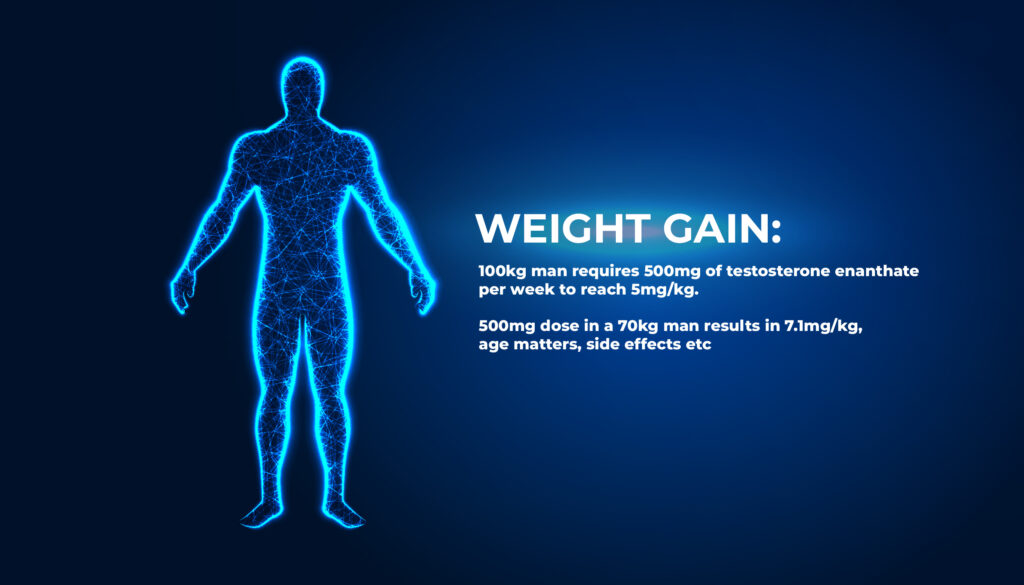
Medical practitioners base their dosing on mg/kg of body weight. A 100kg man requires 500mg of testosterone enanthate per week to reach 5mg/kg. The same 500mg dose in a 70kg man results in 7.1mg/kg, which produces elevated serum levels and stronger side effects.
A weekly dose of 3-6 mg/kg represents the optimal range for typical users. So a 100kg man could take between 300-600 mg of testosterone per week to be in an optimal range.
Age matters too. The side effects from higher doses become more severe in men older than 40 years. The ability to manage side effects worsens with age, so things like stronger estrogen, blood pressure, and cholesterol management might come into play.
Testosterone Esters: Comparison and Contrast
The ester attached to testosterone controls both drug release and half-life duration, which determines injection frequency. That being said, some people are now recommending taking more frequent injections, no matter the ester, to help manage fluctuations, which could in turn lead to fewer side effects and more stable serum levels.
| Testosterone Ester | Half-Life | Dosage | Advantages | Disadvantages |
| Testosterone Propionate | 2-3 days | Every other day | Quick onset, less water retention, faster clearance | More injection pain, frequent injections |
| Testosterone Enanthate | 4-5 days | Twice weekly | Widely available, extensively researched | More water retention, slower clearance |
| Testosterone Cypionate | 5-6 days | Twice weekly | Slightly longer half-life than Enanthate, possibly less water retention | Individual response varies |
| Testosterone Decanoate / Undecanoate | 14+ days | Every 2–3 weeks (varies) | Less frequent injections, stable blood levels, less fluctuations | Slower to reach post-injection pain |
Testosterone Enanthate and testosterone cypionate are usually tolerated well in most individuals. I’ve found testosterone enanthate comes with the least amount of side effects and provides the best balance of convenience and effectiveness.
Practical Applications and Considerations
Post Cycle Therapy (PCT)
Now, I am not a fan of cycling on and off testosterone as I think it leads to more of a roller coaster effect of hormones and could potentially cause more damage than just blasting and cruising or what I like to do which is true TRT with some TRT plus a few months out of the year. But I understand not wanting to commit to pinning yourself for the rest of your life.
If you are planning on cycling anabolic steroids, then post cycle therapy is essential. What you need are SERMs like Clomiphene (50mg daily for 4 weeks) and/or Tamoxifen (20mg daily for 4-6 weeks). Begin PCT after testosterone clears your system – typically 2 weeks after the last injection.
Individualized Dosing
Find your “sweet spot”, the highest dose providing benefits of increased physical performance and recovery without unmanageable side effects. For many, this falls between 300-500 mg weekly.
Regular blood work before you start, as a baseline, and ideally 3-4 weeks after your first injection, is like having the cheat codes for your health. Here’s the thing with this that I wish I had learned earlier. The healthier you are, the more muscle gain and fat loss you will experience in the long run. If your total testosterone, free testosterone, estradiol, hematocrit, lipids, and liver function are all in a healthy range, you can push harder for longer.
Medical Disclaimer
Testosterone should be used under medical guidance. This information is educational only, not medical advice. Unsupervised use carries significant health risks.
Where to Buy the Best PCT and Estrogen Management Products
PCT and proper estrogen management are critical at 500mg weekly or with any steroid use. By using the products below by Swiss Chems, you’re ensuring you’re actually getting what you need in the right doses:

 Aromatase Inhibitor
Overview
- Form: Oral Capsule
- Dosage: 0.5mg 1-2 times weekly
- Typical Cycle: As needed based on blood work (best for managing sides on cycle)
- Cost: $64.03
- Stacking Options: Testosterone enanthate or cypionate
Pros
- Well-established efficacy — ATAC trial showed superior disease-free survival versus tamoxifen in postmenopausal hormone-receptor-positive breast cancer
- Substantially lower risk of endometrial cancer and thromboembolic events than tamoxifen
- Once-daily oral dosing, few significant drug interactions
Cons
- Accelerated bone mineral density loss, with elevated fracture risk over years of use
- Arthralgia and joint stiffness are common and a frequent reason patients stop treatment
- Ineffective in premenopausal women unless ovarian function is suppressed, since it only blocks peripheral aromatisation
SERMs
Overview
- Form: Oral Capsules
- Dosage: 25-50 mg daily for PCT
- Typical Cycle: 4-6 weeks
- Cost: $69.95
- Stacking Option: Tamoxifen for post-cycle recovery
- User Experience: Reliable choice for post-cycle therapy, helping restore natural testosterone production. Users often note improved mood, libido, and quicker recovery post-cycle
Pros
- First-line for ovulation induction in PCOS, with ovulation in roughly 70–80% of appropriately selected women.
- Oral and inexpensive, with no injections or intensive monitoring compared with gonadotropins
- Decades of safety data, and low risk of severe ovarian hyperstimulation relative to injectable alternatives.
Cons
- Ovulation rate substantially exceeds pregnancy rate — the antiestrogenic effect thins endometrium and reduces cervical mucus, working against implantation
- Multiple pregnancy risk around 5–8%, almost entirely twins
- Visual disturbances, hot flushes and mood effects; visual symptoms warrant stopping, and use is generally capped at about six cycles
 SERMs
SERMs
Overview
- Form: Oral Capsules
- Dosage: 25-40 mg daily for PCT or for gyno flare-ups
- Typical Cycle: 4-6 weeks
- Cost: $81.95
- Stacking Options: Higher testosterone doses or post-cycle recovery
Pros
- Large mortality benefit in ER-positive breast cancer; five years of adjuvant treatment cuts recurrence roughly by half and breast cancer mortality by about a third, with the effect persisting well past the treatment period
- Works in premenopausal and postmenopausal women alike, unlike aromatase inhibitors, which makes it the default for younger patients
- Bone-protective in postmenopausal women, since it acts as a partial estrogen agonist in bone — the reverse of anastrozole's main liability
Cons
- Endometrial hyperplasia and a two-to-three-fold increase in endometrial cancer risk in postmenopausal women, requiring investigation of any abnormal bleeding
- Elevated risk of venous thromboembolism and pulmonary embolism, particularly around surgery or immobility
- Hot flashes, vasomotor symptoms and mood effects are common; CYP2D6 status and strong inhibitors such as certain SSRIs can reduce conversion to the active metabolite
Results and Variability: A Closer Look
A study indicates that men taking 600 mg weekly for 20 weeks experienced fat loss and lean mass increases between 2 kg and 13 kg despite receiving the same dosage.
Multiple elements contribute to these differences in results. The metabolism of testosterone, as well as receptor sensitivity, depends on individual genetic characteristics. The distribution volume of hormones and the rates of aromatization change according to body composition. The receptors’ sensitivity to testosterone depends on the person’s age, weight, and resilience to side effects.
The concentration of serum in the body shows wide variations. A single 500mg dose of testosterone can generate serum levels between 1500 ng/dL and more than 3000 ng/dL among others. The wide range of side effects experienced by users can be explained by why some people develop severe reactions while others show no adverse effects at the same dose.
Begin with doses between 250-300 mg weekly before checking blood work results and assessing side effects to guide further dose adjustments.
The Bottom Line
Testosterone dosing is highly individualized and should be approached through personalized monitoring, rather than assuming a universal “optimal” dose.
- Genetics, body weight, age, and metabolism can cause substantially different responses to the same 500 mg dose.
- Use systematic experimentation, expert supervision, and blood work to determine your response and appropriate dose.
- Hormonal self-management is your personal responsibility. Don’t experiment blindly. Your decisions should be guided by data and a healthcare professional.
Frequently Asked Questions
Disclaimer
Please read carefully
The information on this site is for educational and informational purposes only, and is not medical advice. Always consult a qualified healthcare professional before using any supplement or medication, or making changes to your health, fitness, or nutrition routine.
Not medical advice
Content here is not a substitute for professional medical advice.
Consult your doctor
Talk to your doctor before starting any supplement or new routine.
Use at your own risk
We are not responsible for adverse effects from acting on this.
Do your research
Make informed decisions about your own health.
No guarantees
Individual results vary. No claims about outcomes.
Important — Never disregard professional medical advice or delay seeking it because of something you read here. If you think you may have a medical emergency, call your doctor or your local emergency number right away.