
Contents12 sections
If you’ve spent any time looking into peptides, you’ve probably come across the term lyophilized peptides.
So, what exactly does that mean?
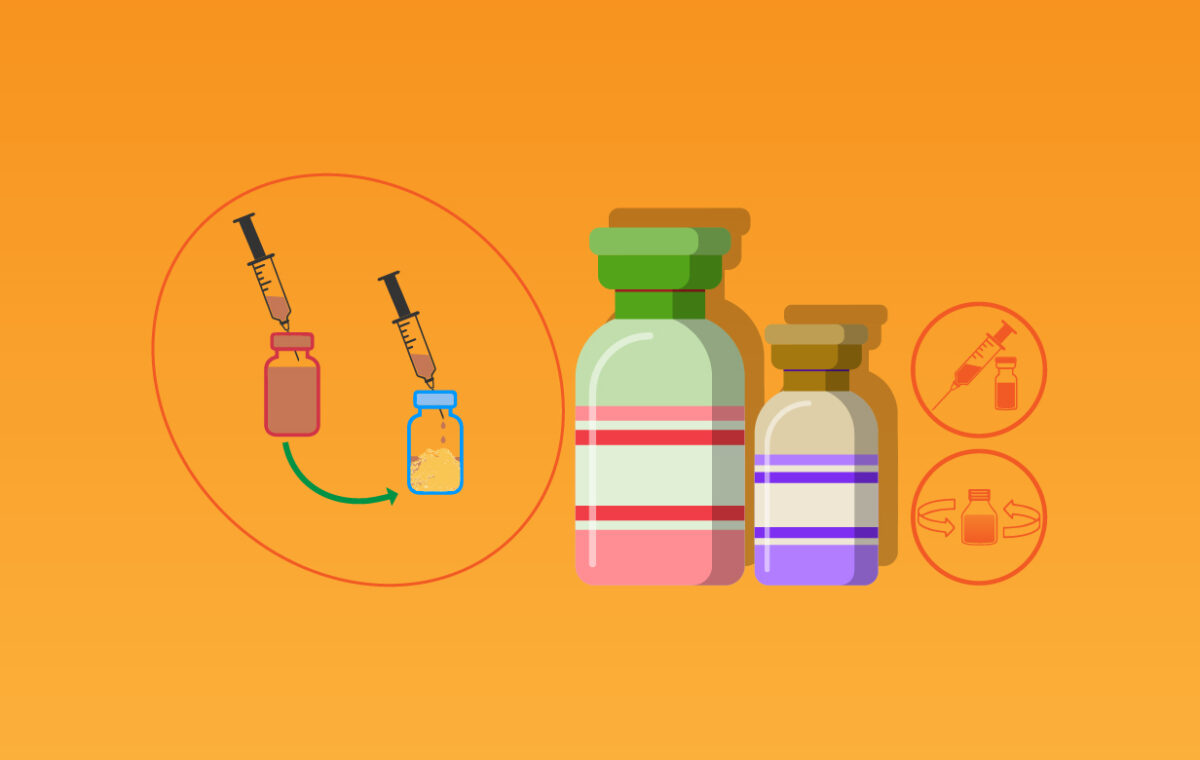
Lyophilized simply means freeze-dried. Many peptide products are supplied as a dry powder because removing water can help improve stability during storage and transportation. Before a peptide can be used in a liquid formulation, that powder has to be reconstituted with an appropriate solvent.
And while peptide reconstitution sounds straightforward, there’s more to it than simply adding water to a vial.
The peptide, solvent, concentration, formulation, and intended use all matter. Getting any of these wrong can affect stability, solubility, sterility, or the quality of the resulting solution.
Here’s what you need to know about peptide reconstitution.
The information on this site is for educational and informational purposes only, and is not medical advice. Always consult a qualified healthcare professional before using any supplement or medication, or making changes to your health, fitness, or nutrition routine.
Key Takeaways
- Lyophilized peptides are freeze-dried preparations designed to improve stability and make storage and transportation more practical.
- Peptide reconstitution involves adding an appropriate solvent to the lyophilized material, but the correct solvent and preparation method vary by peptide and formulation.
- There is no universal reconstitution recipe. Solvent choice, concentration, pH, temperature, and the peptide’s chemical properties can all affect solubility and stability.
- Bacteriostatic water, sterile water, and other solvents are not automatically interchangeable. Always follow the applicable manufacturer instructions or validated laboratory protocol.
- A peptide that becomes cloudy, develops particles, precipitates, or otherwise changes appearance should not simply be used anyway. Unexpected changes should be investigated using appropriate technical documentation.
What Is Peptide Reconstitution?
Peptide reconstitution is the process of adding an appropriate liquid solvent to a lyophilized peptide powder to create a solution.
Lyophilization removes water from a peptide preparation, leaving behind a dry compound that is generally easier to store and transport.
Once reconstituted, however, the peptide can become more vulnerable to factors such as:
- Temperature
- Light
- Contamination
- pH
- Oxidation
- Repeated freeze-thaw cycles
- The choice of solvent
This is why there isn’t a universal reconstitution method that works for every peptide.
The manufacturer’s instructions, formulation information, and intended use should always take priority.
What Do You Need to Reconstitute Peptides?
The materials required depend on the particular peptide and how it is intended to be prepared.
For laboratory research, commonly encountered materials may include:
- Lyophilized peptide
- An appropriate solvent
- Sterile laboratory equipment
- Appropriate containers or vials
- Personal protective equipment
For peptides that are approved prescription medicines, preparation should follow the product’s official instructions and the guidance provided by a pharmacist or other qualified healthcare professional.
This distinction is important because many peptides sold online are marketed as “research use only.” A research peptide is not automatically equivalent to an approved pharmaceutical product, even when the compound has the same or a similar name.
What Solvent Should You Use for Peptide Reconstitution?
This is where things get more complicated.
There is no single solvent that works for every peptide.
Depending on the peptide’s properties and formulation, researchers may use different aqueous buffers or other laboratory solvents. Solubility can be influenced by factors including:
- Peptide sequence
- Charge
- Hydrophobicity
- Concentration
- pH
- Temperature
- The specific formulation
Bacteriostatic water and sterile water are commonly discussed in connection with peptide preparation, but they should not be treated as interchangeable or universally appropriate for every peptide.
Some peptides may require a particular buffer or solvent specified by the manufacturer or research protocol.
And this is one area where guessing is a bad idea.
If a peptide does not dissolve as expected, don’t simply start experimenting with random household liquids or laboratory solvents. Check the manufacturer’s documentation or the applicable research protocol for the appropriate solvent and concentration.
How to Reconstitute Peptides
Once you’ve got a lyophilized peptide in front of you, the next question is obvious: how do you reconstitute it?
The basic concept is simple—an appropriate solvent is added to the freeze-dried peptide to create a solution. But the exact process depends on the peptide, its formulation, and whether you’re working with a research compound or an approved prescription medication.
Step 1: Check the Peptide’s Instructions
Before adding anything to the vial, check the manufacturer’s documentation or applicable research protocol.
Don’t assume that every peptide should be reconstituted with the same solvent or volume. Bacteriostatic water, sterile water, buffers, and other solvents are not universally interchangeable, and the appropriate choice depends on the specific peptide.
The documentation should also provide information about the recommended concentration and storage conditions.
Step 2: Prepare a Clean Workspace
Peptide preparation should be performed using appropriate sterile or laboratory techniques.
For research applications, use the equipment and procedures specified by the relevant laboratory protocol. If you’re preparing an approved prescription medication, follow the preparation instructions supplied with the medication and guidance from your pharmacist or healthcare professional.
Avoid touching sterile components unnecessarily, and don’t proceed if the vial, solvent, or equipment appears contaminated or compromised.
Step 3: Add the Appropriate Solvent
The solvent should be introduced according to the peptide’s specific preparation instructions.
This is where the original “just add 1 mL” approach can be misleading. There is no universal amount of solvent that works for every peptide.
The amount required depends on the amount of peptide present and the concentration you need to achieve. Adding too much or too little solvent changes the final concentration of the solution.
For laboratory research, follow the validated protocol for the specific peptide rather than relying on a generic volume.
Step 4: Allow the Peptide to Dissolve
Once the appropriate solvent has been introduced, allow the lyophilized material time to dissolve according to the manufacturer’s or research protocol’s instructions.
Avoid unnecessarily vigorous agitation. Some peptides can be sensitive to mechanical stress, while others may have specific mixing requirements.
Don’t assume that shaking every peptide will destroy it, but don’t aggressively shake a peptide unless the applicable instructions specifically call for it.
The final solution should be consistent with the appearance described in the relevant product or research documentation.
If you notice unexpected cloudiness, particles, precipitation, discoloration, or other changes, don’t assume the solution is ready for use. Investigate the issue using the appropriate technical documentation.
Step 5: Confirm the Final Concentration
Reconstitution isn’t just about getting the powder to dissolve. The final concentration matters.
For research applications, concentration should be calculated from the amount of peptide and the volume of solvent used, then verified against the applicable protocol.
This is particularly important when working with small quantities, because even a relatively small difference in volume can significantly change the resulting concentration.
What If the Peptide Doesn’t Dissolve?
This is where things can get tricky.
Peptides have different chemical properties, so one peptide may dissolve readily in an aqueous solution while another may require a specific buffer or solvent.
Factors affecting peptide solubility can include:
- Peptide sequence and structure
- Charge and pH
- Hydrophobicity
- Concentration
- Temperature
- Choice of solvent
- Formulation
Some research protocols use specialized buffers or solvents for poorly soluble peptides. Do not experiment with solvents simply because a peptide isn’t dissolving. Instead, consult the manufacturer’s solubility information or the validated protocol for that specific compound.
What About Bacteriostatic Water vs. Sterile Water?
You’ll often see bacteriostatic water and sterile water mentioned in peptide discussions, but they serve different purposes and shouldn’t automatically be treated as interchangeable.
Bacteriostatic water contains a preservative that helps inhibit microbial growth after opening, while sterile water does not contain that preservative.
The appropriate diluent depends on the specific product and intended application. For an approved prescription medication, use only the diluent specified in its official instructions.
For research peptides, follow the applicable laboratory protocol.
A Quick Word on Peptide Reconstitution
The biggest mistake is assuming that one reconstitution method works for every peptide.
It doesn’t.
Different peptides have different solubility, stability, and formulation requirements. The safest approach is to start with the specific peptide’s documentation rather than copying a generic protocol from an online forum or vendor.
And if you’re dealing with a research peptide marketed as “research use only,” remember that reconstituting it does not make it an approved medication or establish that it is safe for human use.
Why Doesn’t My Peptide Dissolve?
Not every peptide has the same solubility characteristics.
A peptide may dissolve poorly because of its sequence, concentration, pH, solvent, temperature, or other formulation factors.
You may also encounter:
- Cloudiness
- Particles
- Precipitation
- Foam
- Undissolved material
- Changes in appearance over time
These aren’t situations where you should automatically assume that “more mixing” will solve the problem.
If the solution looks different from what the manufacturer’s documentation or validated protocol describes, stop and investigate the cause rather than assuming the preparation is safe or suitable for use.
For research applications, the appropriate response may involve reviewing the peptide’s solubility data or consulting the laboratory protocol.
Can You Reconstitute Peptides With Distilled Water?
Not necessarily.
While distilled water is chemically different from sterile water and bacteriostatic water, the appropriate solvent depends on the peptide and its intended application.
Simply knowing that a liquid is “water” doesn’t tell you whether it’s an appropriate solvent for a particular peptide.
For laboratory research, follow the validated protocol for the specific compound.
For an approved prescription peptide, use only the diluent and preparation method specified in the product’s official instructions.
How to Store Reconstituted Peptides
Once a peptide has been reconstituted, storage becomes especially important.
The appropriate storage conditions can vary considerably depending on the peptide, formulation, solvent, concentration, container, and intended use.
General factors to consider include:
Temperature
Many peptide preparations are sensitive to temperature. Follow the manufacturer’s storage instructions rather than assuming that every reconstituted peptide should automatically be refrigerated or frozen.
Light
Some peptide preparations may be sensitive to light. Keeping them protected from unnecessary light exposure can help maintain stability when recommended by the manufacturer.
Freeze-Thaw Cycles
Repeatedly freezing and thawing a peptide preparation can affect its stability.
For research applications where freezing is appropriate, researchers may use aliquots to minimize unnecessary freeze-thaw cycles.
Time
A reconstituted peptide generally should not be assumed to remain stable indefinitely.
The usable storage period depends on the specific peptide and formulation. There is no universal “X days” rule that applies to every peptide.
Always defer to validated stability data or the manufacturer’s instructions.
Can You Mix Peptides in the Same Syringe?
This is another area where you should avoid assuming that two peptides can simply be combined.
Different peptide formulations may have different pH, solvent, concentration, compatibility, and stability requirements.
Combining them can potentially cause precipitation, degradation, contamination, or other compatibility problems.
Even when two compounds are commonly discussed as a “stack,” that does not automatically mean they are chemically compatible in the same solution or administration device.
For research purposes, compatibility should be established through appropriate formulation or laboratory data.
For prescription medications, only combine products when the prescribing healthcare professional or official product instructions specifically indicate that doing so is appropriate.
What Is the Difference Between Reconstituting Research Peptides and Prescription Peptides?
This distinction is easy to overlook.
Research peptides are compounds intended for laboratory research and may not have been evaluated or approved for human use.
Prescription peptide medicines, on the other hand, have gone through the regulatory process applicable to their approved medical use and come with specific preparation, dosing, storage, and administration instructions.
That means instructions found on an online peptide vendor’s website should not automatically be treated as equivalent to pharmaceutical instructions.
If you’re dealing with an approved medication, the official prescribing information should be your primary source.
The Bottom Line
Peptide reconstitution is a straightforward concept, but the correct preparation method depends heavily on the individual peptide, formulation, solvent, concentration, and intended application.
- Lyophilization allows peptides to be supplied as a dry powder, which can improve practicality during storage and transportation.
- Once that material is reconstituted, however, factors such as temperature, light, pH, oxidation, contamination, and repeated freeze-thaw cycles can affect its stability.
- There is no universal solvent, dilution volume, storage period, or handling procedure that applies to every peptide.








Is there different calculations to be made when reconstituting peptide blends? I’ve always used separate vials for each peptide. Does the peptide calculator on your site work for blends also?
I am trying this stack from this article:
https://muscleandbrawn.com/peptides/sermorelin-ghrp-2-stack-a-new-look/
I ordered this to try: https://www.corepeptides.com/peptides/sermorelin-ipamorelin-10mg-blend/
How much bac water to 12ml semaglutide and how much to administer
where can I purchase bacteriostatic water to reconstitute peptides