
Contents8 sections
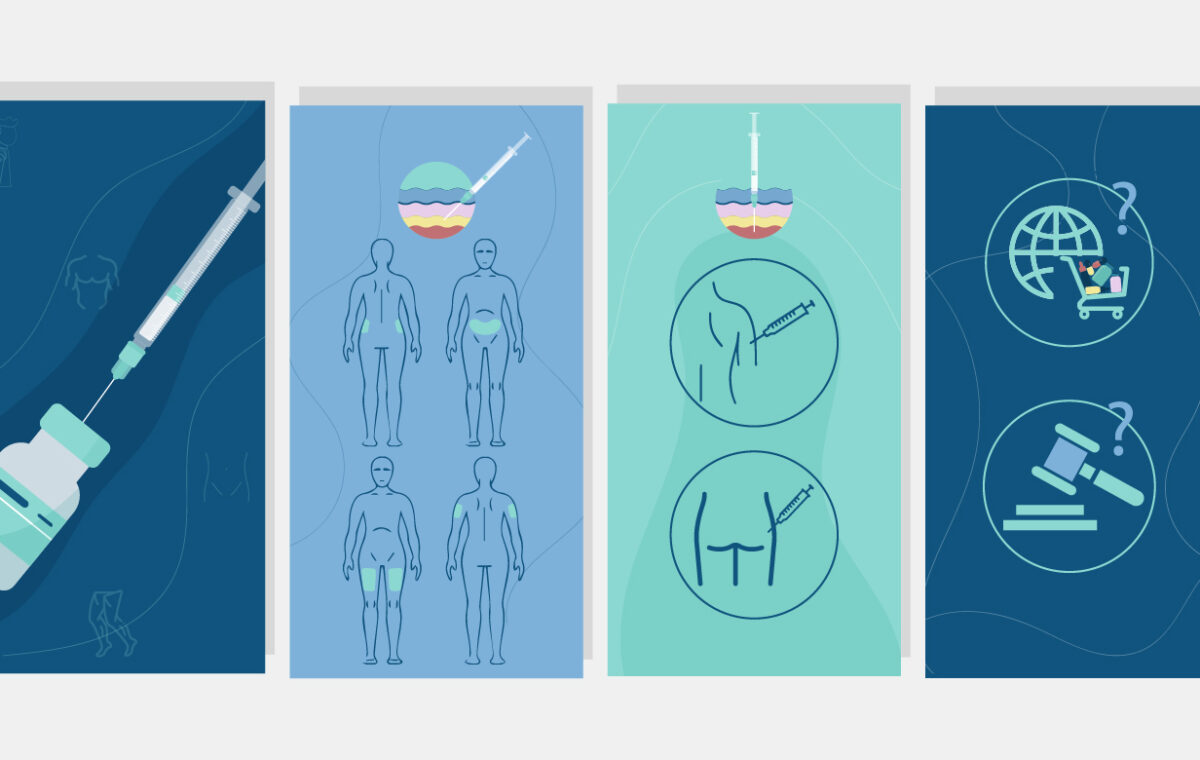
If you’ve been prescribed an injectable peptide, one of the first practical questions you may have is where it should be administered.
The answer depends on the specific peptide, its intended route of administration, and the instructions provided by your healthcare professional. Some injectable peptides are administered subcutaneously, meaning into the fatty tissue beneath the skin, while others may require intramuscular administration.
For peptides intended for subcutaneous use, common injection areas include the abdomen, thigh, and upper arm. The most important considerations are using the correct route, maintaining proper hygiene, and rotating injection sites rather than repeatedly injecting the same spot.
This guide explains the most common peptide injection sites, how subcutaneous and intramuscular administration differ, and what to know before injectable peptide therapy.
Key Takeaways
- The appropriate injection site depends on the peptide and prescribed route of administration.
- Subcutaneous injections are administered into the fatty tissue beneath the skin and commonly use areas such as the abdomen, thigh, or upper arm.
- Intramuscular injections are delivered into muscle and should generally be performed by a trained healthcare professional unless you’ve specifically been instructed otherwise.
- Rotating injection sites can help reduce irritation, bruising, and tissue damage.
- Proper hygiene and sterile equipment are essential whenever an injectable medication is administered.
What Is the Best Peptide Injection Site?
There isn’t one universally best injection site for every peptide.
The appropriate location depends first on how the particular peptide is intended to be administered. If a medication is prescribed for subcutaneous injection, it is generally administered into an area with an adequate layer of fatty tissue.
Common subcutaneous injection sites include:
- Abdomen
- Front or outer thigh
- Upper arm
Your medication’s prescribing information or healthcare provider should determine the appropriate site rather than a generic peptide injection guide.
Upper Arm
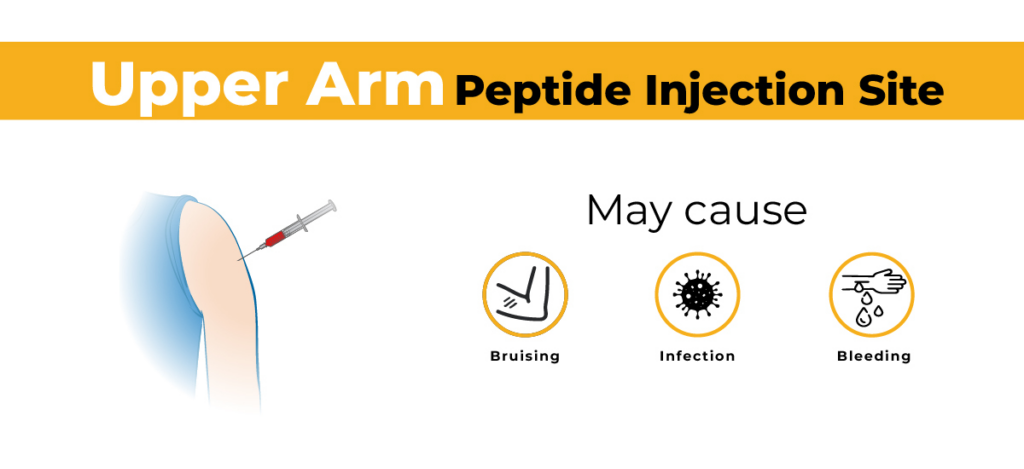
People choosing to avoid frequent visits to the healthcare provider often opt for self administration of peptides via subcutaneous injections in the upper arm due to the ease and convenience of the location.
Despite it being generally safe and effective when following proper dosing and safety considerations, there are potential complications and risks one must be aware of:
- May cause bruising, bleeding, or infection at the injection site. Always use sterile equipment and sterilize the site to minimize the risk of complications.
- Repeated injections in the same area can cause tissue damage or irritation, which can lead to severe complications such as skin infections and the development of lumps. Avoid injecting in the same place every time.
- Patients with limited mobility or those who have difficulty reaching the upper arm may find it more difficult to self-administer peptides in this area. In such cases, alternative injection sites, such as the abdomen or thigh, may be more suitable.
Torso
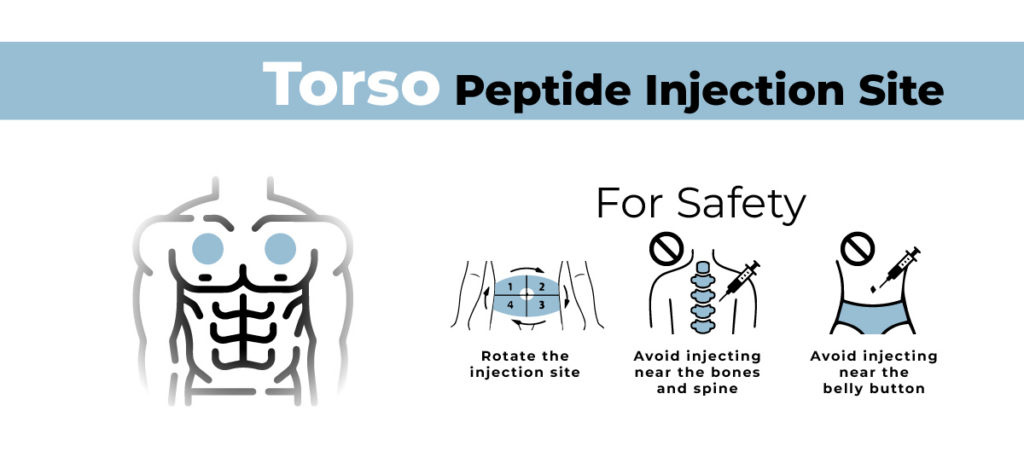
The subcutaneous layer of the skin in the torso area is rich in adipose or fatty tissue, making it an ideal site for peptide absorption.
One of the benefits of subcutaneous injections in the torso is that they can provide a longer-lasting and more consistent effect of the peptide due to the slower absorption rate. Additionally, the lower risk of blood vessel puncture and fewer nerve endings in the subcutaneous tissue in these areas make it a safe and effective option for peptide therapy [2].
Some dosing and safety instructions to consider:
- Rotate the injection site regularly to avoid bruising, tissue damage or irritation.
- Avoid injecting near the spine or other bony areas to prevent injury.
- Injecting too close to the belly button or other sensitive areas can also cause discomfort.
Abdomen
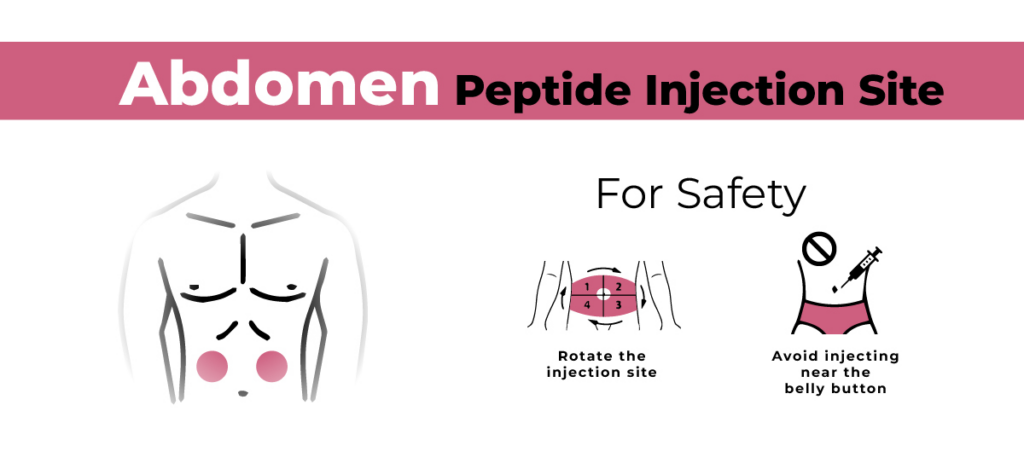
Administering peptides via the subcutaneous route in the abdomen is a safe method of peptide therapy because it has a high concentration of subcutaneous tissue, making it an ideal location for peptide administration.
However, it is important to exercise caution when injecting in this area. It is recommended to avoid the immediate area around the belly button, as it can be more sensitive and may cause discomfort. It is also important to rotate injection sites regularly to avoid tissue damage or irritation.
Lower Limbs
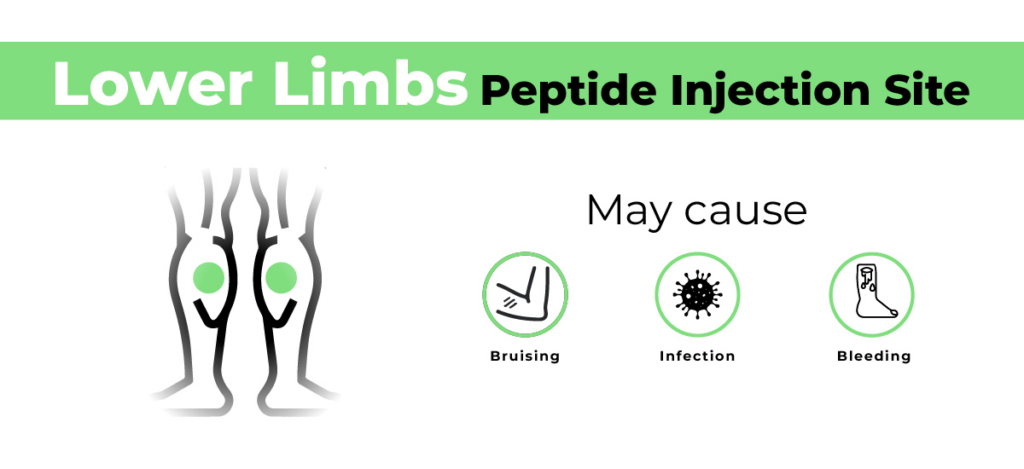
While subcutaneous injections are highly effective, when it comes to administering peptides via the subcutaneous route in the lower limbs, caution is advised. Peptide injections can be administered in the upper thighs, but it is important to follow proper injection techniques and guidelines to ensure safety and effectiveness.
While subcutaneous injection into the lower limbs may be possible, it is generally not recommended as a preferred injection site due to the possible complications involved including tissue damage and injection site reactions:
- The skin in the lower limbs is typically thinner and more sensitive than other parts of the body, which can increase the risk of pain, bleeding, and infection.
- Limbs have a higher concentration of nerves and blood vessels, which increases the risk of hitting a nerve or injecting into a blood vessel. This can cause pain, numbness, and other complications that may require medical attention.
How to do a Subcutaneous Injection
Are you wondering how to give a subcutaneous injection? Here’s a step-by-step guide to make the process easier [4]:
- First, determine the appropriate needle length for the injection and ensure you have the correct dose of peptide medication.
- Next, wash your hands and open an alcohol pad to clean the area in circular motion where you plan to give the injection. Make sure the area is dry before proceeding.
- Collect the needle and syringe and ensure these are fully sterilized. Use sterile water to keep these parts clean.
- Prepare the needle by removing the needle cap with your non-writing hand. Hold the syringe upside between your thumb and index finger and let the barrel rest on your second finger. Ensure there are no air bubbles inside the injection.
- With your other hand, grasp the skin where you plan to inject the medicine. The injection can be given straight in at a 90 degree angle or at a 45 degree angle depending on how much skin you can grasp.
- Apply pressure and slowly push the needle into the chosen injection site. Once the needle is all the way in, push the plunger down to administer the medication.
- Withdraw the needle at the same angle you put it in and gently wipe the injected area with a gauze pad.
Remember to dispose of the needle safely and properly in sharps container. If you have any concerns or questions, consult with your healthcare provider before administering the injection.
Can You Inject Peptides Intramuscularly?
While subcutaneous injection is the most common method of administration for peptides, some peptides may be more effective when injected directly into a muscle [3]. This is known as an intramuscular injection and involves inserting the needle deeper into the tissue to reach the muscle layer.
Intramuscular injections are typically administered by healthcare professionals, as they require proper technique and knowledge of anatomy to avoid injury or discomfort. It is important to follow dosing and safety instructions when administering any type of injection, including IM injections.
Are Peptides Legal?
Peptides are legal for certain purposes, such as for medical research and educational purposes. However, some peptides have been found to be misused for performance enhancement and are considered illegal.
The legality of peptides varies by country and jurisdiction, and it is important to consult with local regulations before purchasing or using peptides.
In the United States, the use of peptides is regulated by the Food and Drug Administration (FDA) and the Drug Enforcement Administration (DEA). The FDA oversees the approval and labeling of prescription peptides, while the DEA regulates the distribution and use of controlled substances [5].
The Bottom Line
The safest peptide injection site is the one appropriate for the specific medication and route prescribed, with proper technique and site rotation being more important than finding a universally “best” location.
- For subcutaneous injections: The abdomen, thigh, and upper arm are commonly used sites when approved for the specific medication.
- For intramuscular injections: The appropriate site depends on the medication and should generally be selected and administered by a trained healthcare professional.
- For unapproved peptides: Online injection instructions cannot replace medical guidance, particularly when the product’s purity, sterility, dosage, or human safety has not been established.
Frequently Asked Questions
Disclaimer
Please read carefully
The information on this site is for educational and informational purposes only, and is not medical advice. Always consult a qualified healthcare professional before using any supplement or medication, or making changes to your health, fitness, or nutrition routine.
Not medical advice
Content here is not a substitute for professional medical advice.
Consult your doctor
Talk to your doctor before starting any supplement or new routine.
Use at your own risk
We are not responsible for adverse effects from acting on this.
Do your research
Make informed decisions about your own health.
No guarantees
Individual results vary. No claims about outcomes.
Important — Never disregard professional medical advice or delay seeking it because of something you read here. If you think you may have a medical emergency, call your doctor or your local emergency number right away.









how can i stop it hitting and injection site hurts and stings with a lump for 24 hours and i am supposed to inject everyday