
Contents11 sections
Men have all sorts of hormones in our bodies that helps them live and gives a smile. One of the many amazing male hormones is testosterone.
You’ve probably heard about this hormone at some point in your life. And, it is no secret this hormone plays a very important role in the lives of men.
Testosterone is basically responsible for the development of a males physical features – facial hair and muscle mass.
Testosterone’s responsibility isn’t just to make men look good. It’s also the primary male sex hormone responsible for maintaining a healthy sex-drive, building a strong skeletal system, and even plays a role in brain function – specifically memory and mood.
Unfortunately, as men age, they will begin to experience a decline in testosterone levels (also known as hypogonadism).
Some men may even have low free testosterone range (active test) at a young age, do to high levels of Sex Hormone Binding Globulin.
Here, we will discuss what typical testosterone levels in males are, as well as help understand the values and why they are important to maintain at a healthy level at any age.
The information on this site is for educational and informational purposes only, and is not medical advice. Always consult a qualified healthcare professional before using any supplement or medication, or making changes to your health, fitness, or nutrition routine.
Key Takeaways
- Total testosterone and free testosterone measure different things. Free testosterone represents the fraction not tightly bound to proteins and available to tissues, but it should be interpreted alongside total testosterone and other clinical information.
- There is no single “ideal” testosterone number for every man. Reference ranges vary by laboratory, testing method, age, and population.
- A low testosterone result alone does not diagnose hypogonadism. Symptoms and consistently low morning testosterone measurements are typically considered together when evaluating possible deficiency.
- Testosterone naturally changes with age, but aging is only one possible factor. Obesity, sleep problems, chronic illness, medications, and other health conditions can also affect testosterone levels.
- Symptoms such as low libido, fatigue, erectile difficulties, and reduced muscle mass are not specific to testosterone deficiency. Other medical conditions can produce similar symptoms.
Testosterone Levels in Men by Age
It is important to know that testosterone levels will differ from man to man. In fact, there is actually a wide range of what is considered a “normal range.”
However, the average male testosterone level is said to be anywhere between 270 to 1070 ng/dL, with adult males with testosterone levels below 300 ng/dL being classified as having low testosterone levels by the American Urology Association (AUA).
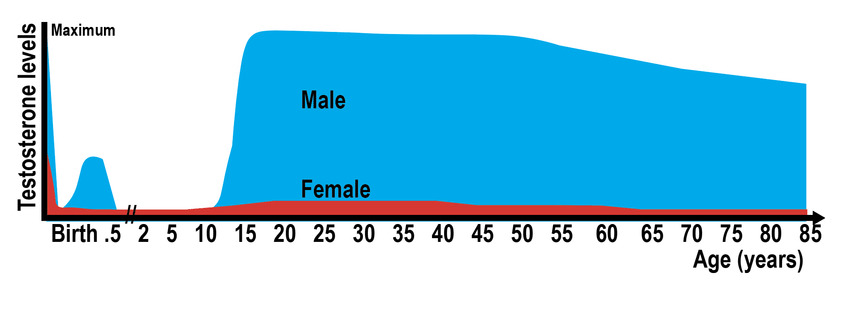
When males grow and enter puberty, testosterone levels will spike and peak in their 20s and 30s. By the time they are 50, testosterone levels will have declined.
It is said that after 30, testosterone levels gradually decline by about one percent each year. Let’s explore this by age.
Testosterone Levels at Birth
Testosterone is essential for normal development in the womb. [1] At birth, most males will have low levels of testosterone in their system. This is nothing to worry about as their levels will gradually increase throughout childhood.
During the next stage in their life, after birth, testosterone levels will surge and provide the fuel for the puberty growth spurt.
Testosterone Levels for an Adolescence to Young Adult
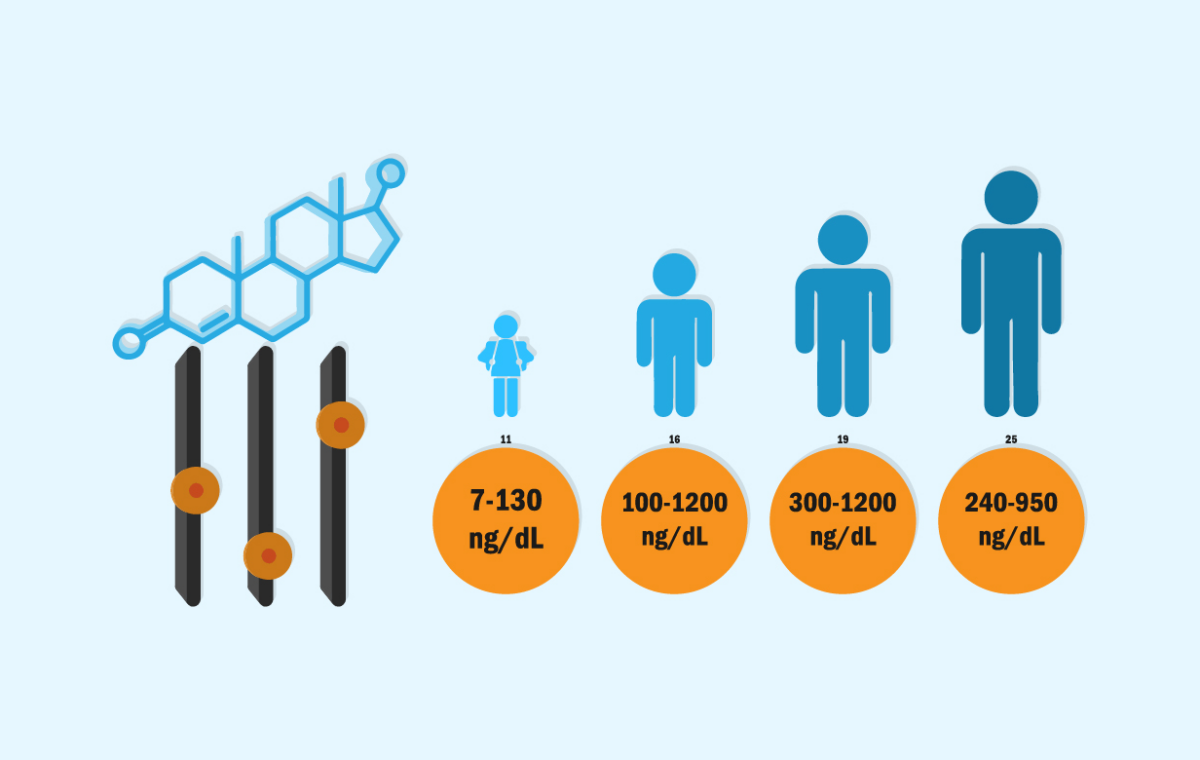
During puberty, testosterone levels will increase dramatically. This is essential for the development of male sexual characteristics. From birth to about age 12, testosterone levels continue to remain quite low. However, they will gradually increase as they near puberty, reaching the a high around age 16 or 17.
Approximate Range of Normal Testosterone Levels by Age (men):
Child
The age of a child is generally defined as being between birth and puberty. Range is approximately 1.8-400 ng/dL.
Adolescent
An adolescent is a person aged 13 to 18 years old. Range of normal testosterone levels is between 240-950 ng/dL
Adult
An adult is a person aged 19 years or older. Normal range of testosterone levels falls between 270- 1070 ng/dL
Due to the rapid hormone change during puberty, these values can change significantly by age. Once a young man reaches adulthood, his testosterone levels should level out and remain relatively stable.
A quick note – clinicians usually follow the American Urology Association’s (AUA) guidelines. According to AUA, testosterone levels below 300 ng/dL are classified as low testosterone.
Normal Testosterone in Adult Males
If you’re reading this, you might be asking yourself a few questions right now, “what if my testosterone is 250 ng/dL? Is that bad?”.
There is a likelihood that the number itself should not warrant you to run out and seek testosterone replacement therapy (the treatment option for men with a testosterone deficiency). Rather, this is an indication to consult with a doctor.
As men age, testosterone levels will gradually decline. This is a natural part of the aging process that every male should be aware of.
Think of it like this, the average man will lose about one percent of his testosterone each year, starting around age 30.
So, if a 70-year-old man has a testosterone level of 400 ng/dL, that would be considered completely normal and nothing to worry about. On the other hand, if a 30-year-old man has a testosterone level of 400 ng/dL, then he may want to consult with a doctor. This is because his testosterone levels should be much higher.
It is also important to note that some men may experience a drop in testosterone levels earlier than others. Here is the average testosterone levels of fully grown adult men by age.
Average Testosterone Level of Men in their 30s
270-975 ng/dL
Average Testosterone Level of Men in their 40s
220-872 ng/dL
Average Testosterone Level of Men in their 50s
200-900 ng/dL
Average Testsosterone Level of Men in their 60s, 70s and beyond
156-820 ng/dL
As you can see, there is still a wide range of what is considered “normal.” However, it is important to keep in mind that these numbers are averages. So, some men may be on the lower end of the spectrum while others may be on the higher end.
Free Testosterone in Males by Age
| Age of the male 🚹 | Total Test 🧬 | Free Test 🩸 |
| 20 – 30 | 270-975 ng/dL | 4.6-18.2 ng/dl |
| 30 – 40 | 220-872 ng/dL | 4.4-16.51 ng/d |
| 40 – 50 | 200-900 ng/dL | 3.98-14.9 ng/d |
| 50+ | 156-820 ng/dL | 2.5-14.1 ng/d |
What Can I Do If I Think I Have Low Testosterone?
What if one day you begin to notice a decrease in energy or noticed a decrease in your sex drive?
These are two of the most common symptoms associated with low testosterone levels. To be certain this is what you are experiencing, you might want to have your blood tested to make sure this is actually what is wrong.
Your best bet would be to have your Testosterone tested with a company like LetsGetChecked, an online testing company that has more than just Testosterone level tests.

Testosterone Level: Units
The units that are used when measuring testosterone levels are ng/dL. This stands for nanograms per deciliter. The nanograms is weight while the deciliter is volume.
To give you some perspective, one nanogram is equivalent to one-billionth of a gram while one deciliter is equivalent to 100 milliliters or approximately three and half ounces.
In other words, when your testosterone levels are measured in ng/dL, this is telling you how many nanograms of testosterone are present for every deciliter of your blood.
Because testosterone is typically measured in your blood, the weight amount gives a good indication of how much of the hormone is actually floating around in your blood at any given time.
Think of it like this, if you hold a jar that holds pickles and you struggle to pick it up, you would expect there to be more pickles in the jar due to the effort being exerted in picking it up. This is the same with testosterone levels and the weight measurement of nanograms.
A higher number of nanograms per deciliter typically indicates a higher level of testosterone in your blood.
This is why when doctors are trying to determine if you have a testosterone deficiency, they will often request a blood draw to measure your testosterone levels.
Testosterone: What Is It?
Now to explain testosterone.
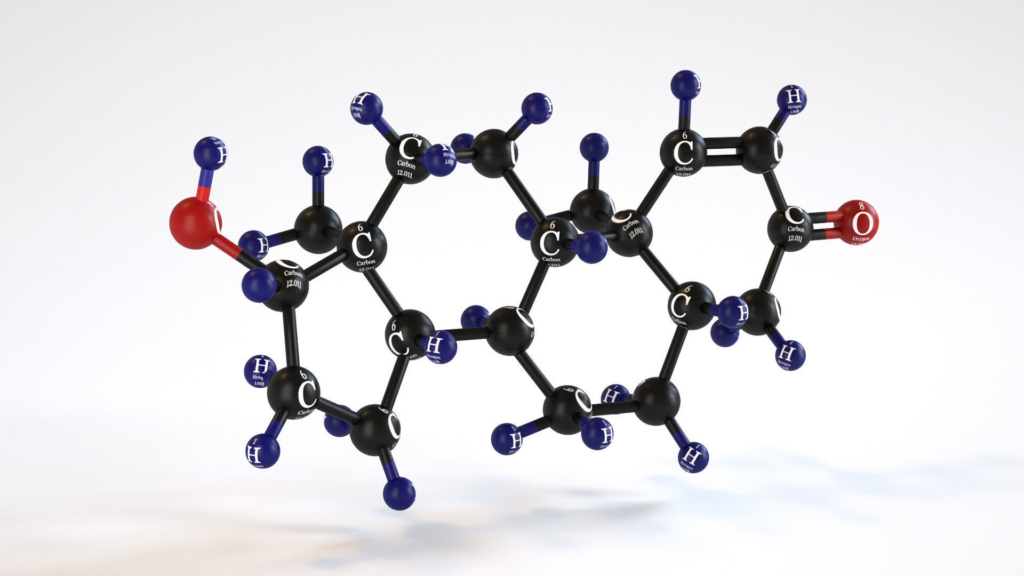
Testosterone is a natural and essential hormone that is needed for normal development in men. While testosterone is most commonly associated as the hormone that gives men their male features such as hair pattern and deepened voice.
Testosterone has also shown to be important for growth of the skeletal system, development of muscle mass, and has even been shown to play a role in brain function, particularly in the areas associated with memory and mood. [2]
Additionally, testosterone helps with regulating sperm production, descent of the testicles, and libido. [3]
Men with low testosterone levels will typically experience a few key symptoms.
Most Common Symptoms of Low Testosterone
- decreased libido
- erectile dysfunction
- decrease in muscle mass and strength
- weakened bones as a result of loss in bone mineral density (arthritis)
- fatigue
- depression
- lack of focus
- hair loss
- decrease in energy levels
These symptoms can also be signs of other medical symptoms, so it is important to consult with your doctor first.
Why Do Testosterone Levels Decline?
Notice those sluggish symptoms creeping in? That’s your body signaling a natural testosterone dip—not an endgame, but evolution. Testosterone powers growth, reproduction, and vitality, but eventually, your body scales back production—it’s all part of the plan.
The primary culprit behind declining testosterone is age. Men typically hit peak testosterone in their 20s, followed by a steady decline after 30. By midlife, many men experience noticeable symptoms like fatigue, decreased libido, or mood swings. This gradual drop is often nicknamed “male menopause” or andropause, but its clinical term is late-onset hypogonadism.
Aging isn’t the sole factor, though. Lifestyle choices, stress, obesity, and certain health conditions can also trigger lower testosterone levels. Maintaining a balanced diet, regular exercise, and stress management can help counteract the decline.
According to one study, the average rate in which testosterone decreases in men as they age, starting at age 30 is approximately 110 ng/dL every decade. [4]
Other Reasons For Drop in Testosterone
There are other reasons, apart from aging, that can also cause a drop in testosterone. Some of which include:
- poor diet
- lack of exercise
- smoking
- liver disease (from alcohol abuse)
- chronic drug use
- AIDS
- steroid abuse
Surprisingly, a research that investigated men of similar age who led a healthy lifestyle versus those who lived an unhealthy one discovered that those who ate poorly and smoked frequently had drastically lower testosterone levels. [5]
So, if you are noticing some of the signs and symptoms associated with low testosterone, it might be a good idea to consult with your doctor. A simple blood test can easily measure your testosterone levels and give you a better understanding of what’s going on with your body.
Is There Treatment for Low Testosterone?
The easiest way to increase Free Testosterone is to take a Boron supplement which is known to lower Sex Hormone Binding Globulin.
If you are in need of TRT, the best and easiest way is to work through an online TRT clinic. These are legal clinics that work with patients online in order to provide them with the medication they need to get their lives back.
The Clinic we would recommend would be Evolve Telemed HRT. They have high specialized medical doctors and a host of good reviews, and we have had success with them as well.
If you have low testosterone, it is nothing to be ashamed of. In fact, it is a very common condition that can be easily treated.
Other Treatments for Low Testosterone:

Testosterone replacement therapy is not for everyone. Sometimes, it can simply be a matter of making a lifestyle change. Diet and exercise are key factors that influence testosterone levels.
If you are overweight, shedding a few pounds can do wonders for your testosterone levels. Exercise, especially weight lifting, has been shown to be one of the most effective ways to bring one back to healthy testosterone levels. [6]
Discuss the advantages and disadvantages of testosterone replacement therapy with your physician to see if it is a good option for you. You shouldn’t have to suffer through life with low testosterone levels – you deserve happiness and normalcy.
The Bottom Line
Free testosterone can add important context to a testosterone evaluation, but there is no universal “good” number; results need to be interpreted alongside total testosterone, SHBG, symptoms, and the laboratory’s reference range.
- Free testosterone reflects the portion of circulating testosterone that is not tightly protein-bound, but its interpretation depends heavily on the testing method and reference range.
- A single low result isn’t enough to establish testosterone deficiency. Persistent symptoms and appropriately timed repeat testing are more informative than one isolated number.
- Men experiencing persistent changes in libido, erections, energy, mood, or muscle mass should discuss their symptoms and laboratory results with a healthcare professional rather than attempting to raise testosterone based on a number alone.
Frequently Asked Questions
Disclaimer
Please read carefully
The information on this site is for educational and informational purposes only, and is not medical advice. Always consult a qualified healthcare professional before using any supplement or medication, or making changes to your health, fitness, or nutrition routine.
Not medical advice
Content here is not a substitute for professional medical advice.
Consult your doctor
Talk to your doctor before starting any supplement or new routine.
Use at your own risk
We are not responsible for adverse effects from acting on this.
Do your research
Make informed decisions about your own health.
No guarantees
Individual results vary. No claims about outcomes.
Important — Never disregard professional medical advice or delay seeking it because of something you read here. If you think you may have a medical emergency, call your doctor or your local emergency number right away.







I am 65, and my Free Testosterone level should be 194 to 489. Blood tests showed my FT was only 69, and I wanted to know what age that would be a minimum for ? I thought maybe a minimum for 140 year old, but I guess that figure of 69 wont be on any scale anywhere.
Makes no sense at all!!