
Contents12 sections
MOTS-c before and after results typically show improved energy and recovery within the first two weeks, with measurable body composition and performance changes appearing between weeks 5-8. The peptide works by activating AMPK, improving glucose uptake, and enhancing mitochondrial function, but it requires consistent training and diet to produce meaningful results.
The MOTS-c peptide (Mitochondrial Open Reading Frame of the 12S rRNA type-c) is a 16-amino acid molecule encoded by mitochondrial DNA. Unlike most peptides that come from nuclear genes, MOTS-c originates from the mitochondria themselves and acts as a signaling molecule between mitochondria and the cell nucleus. This cross-talk role is what makes it relevant to energy metabolism, insulin sensitivity, and aging.
The peptide gained attention in the fitness and longevity community after animal studies showed it could prevent obesity, improve insulin resistance, and enhance exercise capacity. Human research is still limited, but early clinical data and user reports suggest the effects translate, at least partially, to people.
This guide covers what MOTS-c actually does, realistic MOTS-c before and after expectations at each stage of a cycle, dosing protocols, side effects, and how to structure training and nutrition to get the most out of it.
Key Takeaways
- MOTS-c is a mitochondrial-encoded peptide that activates AMPK, improving glucose uptake and fatty acid oxidation at the cellular level.
- Most users notice steadier energy and improved recovery within weeks 1-2, with body composition changes (reduced waist measurement, improved muscle definition) appearing by weeks 5-8.
- Standard dosing is 5mg subcutaneously 2-3 times per week for the first 2 weeks, increasing to 10mg 2-3 times per week for weeks 3-6, then tapering back to 5mg for weeks 7-8.
- Circulating MOTS-c levels decline with age, which may contribute to age-related metabolic decline. Exercise naturally increases MOTS-c expression in skeletal muscle.
- Human clinical data is limited. MOTS-c is sold for research purposes only and is not FDA-approved. Work with a clinician before using any peptide.
What Is MOTS-c and How Does It Work?
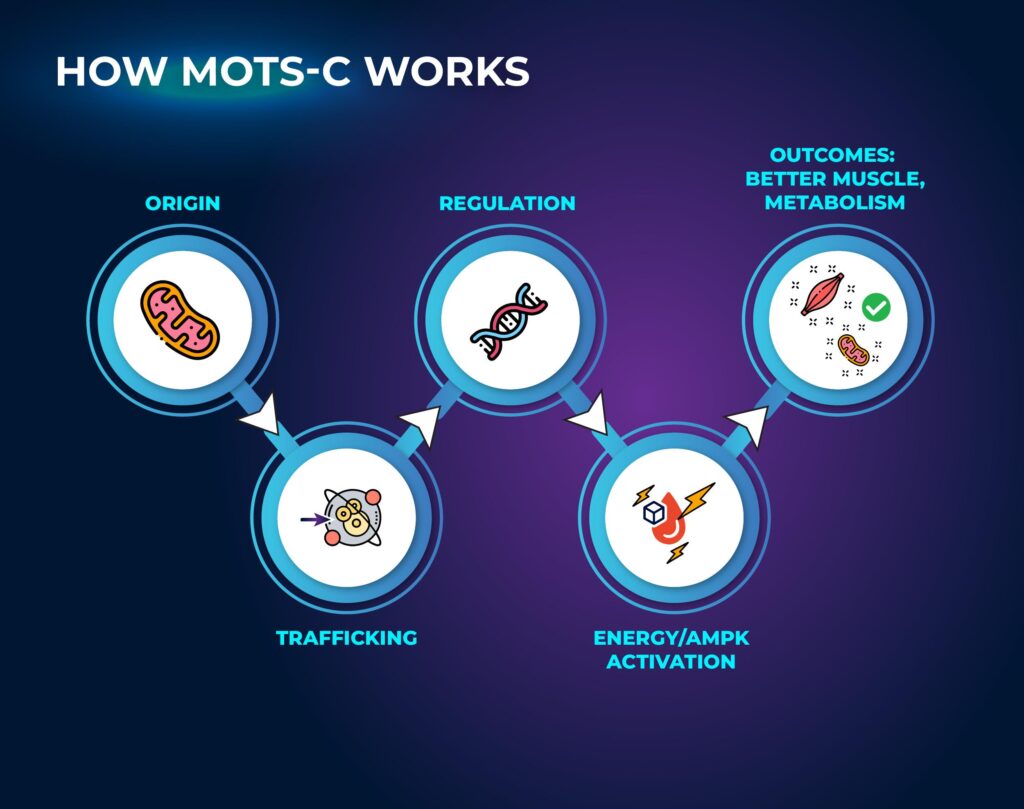
MOTS-c is a mitochondrial peptide, meaning your mitochondria produce it from their own DNA rather than from the cell’s nuclear DNA. It was first identified in 2015 by researchers at the University of Southern California, who found that it could regulate metabolic homeostasis in mice, preventing weight gain and improving insulin sensitivity even on a high-fat diet.
The peptide works through several interconnected mechanisms:
AMPK Activation
AMPK (AMP-activated protein kinase) is the cell’s primary energy sensor. When AMPK is activated, cells shift from energy storage to energy use; glucose uptake increases, fatty acid oxidation ramps up, and mitochondrial biogenesis accelerates. MOTS-c activates AMPK, essentially telling cells to burn fuel rather than store it.
This is the same pathway activated by exercise and by the diabetes drug metformin, which is part of why MOTS-c has drawn comparisons to both.
Nuclear Translocation
During metabolic stress (exercise, fasting, caloric restriction), MOTS-c can travel from the mitochondria to the cell nucleus. Once there, it influences gene expression related to energy metabolism and stress response. This mitochondria-to-nucleus communication is relatively unique among peptides and helps explain the broad range of reported effects.
Insulin Sensitivity
MOTS-c improves insulin sensitivity by enhancing GLUT4 transporter activity in skeletal muscle. Better insulin sensitivity means cells need less insulin to handle the same glucose load. This has implications for body composition (less fat storage), energy stability (fewer blood sugar crashes), and long-term health (reduced diabetes risk).
Fatty Acid Oxidation
By activating AMPK and improving mitochondrial function, MOTS-c promotes fatty acid oxidation, particularly during exercise. This means your body becomes more efficient at using stored fat for fuel, which supports both endurance performance and fat loss when combined with appropriate training and diet.
MOTS-c Before and After: Realistic Timeline
Your MOTS-c before and after results depend heavily on your training, diet, and baseline metabolic health. The peptide amplifies the effects of good habits; it does not replace them. Here is what a realistic timeline looks like for a healthy male using standard dosing alongside consistent training.
What to Track Before Starting
Before your first dose, establish baseline measurements:
- Body weight and waist/hip measurements
- Fasting glucose (if your doctor orders it)
- Resting heart rate
- Training logs (sets, reps, loads for key lifts)
- Daily energy rating (simple 1-10 scale, morning and afternoon)
- Sleep duration and quality
These allow you to compare your MOTS-c before and after objectively rather than relying on subjective impressions.
Week-by-Week Results Timeline
| Timeframe | Expected Changes |
|---|---|
| Weeks 1-2 | Energy feels more stable throughout the day, fewer afternoon crashes. Slight improvement in training recovery. Hunger patterns stabilize. No visible body composition changes yet. |
| Weeks 3-4 | Endurance sessions feel smoother with less perceived effort at the same intensity. Recovery between training sessions improves noticeably. Sleep quality may improve. Strength endurance (reps at a given weight) starts climbing. |
| Weeks 5-8 | Body composition shifts become visible if diet supports them (caloric deficit for fat loss, surplus for muscle gain). Waist measurement typically drops before scale weight changes significantly. Vascularity and muscle definition improve. Cardio capacity advances. |
| Post-cycle (4-week off period) | Energy normalizes. Training gains from the cycle are largely retained if training and diet stay consistent. Some metabolic benefits may persist due to improved mitochondrial function. |
Results by Goal
Individual MOTS-c results vary depending on your primary goal and how well your nutrition supports that goal:
- Fat loss (caloric deficit): 4-8 lbs fat loss over 8 weeks, with waist reduction of 1-2 inches. MOTS-c supports this by improving fatty acid oxidation, but the deficit drives the results.
- Body recomposition (maintenance calories): Modest body composition improvement. Slightly more muscle definition, reduced midsection fat. Most noticeable in users with moderate body fat (15-20%).
- Endurance performance: Measurable improvement in zone 2 work capacity. Time at threshold pace improves. Perceived exertion drops for steady-state cardio.
- Longevity and metabolic health: Improved fasting glucose, better lipid markers, more stable energy. These are the primary clinical targets of MOTS-c research.
MOTS-c Dosage and Cycle Protocol
MOTS-c is administered subcutaneously (under the skin). A standard MOTS-c cycle follows a ramp-up, maintain, and taper structure to mimic physiological pulsing and reduce tolerance development.
Standard 8-Week Cycle
| Phase | Weeks | Dose | Frequency | Notes |
|---|---|---|---|---|
| Introduction | 1-2 | 5mg | 2-3x per week | Assess tolerance. Track energy, sleep, appetite. |
| Active phase | 3-6 | 10mg | 2-3x per week | Maintain training and diet. Add zone 2 cardio if not already included. |
| Taper | 7-8 | 5mg | 2x per week | Begin reducing frequency. Recheck waist, strength markers, and labs if ordered. |
| Off period | 9-12 | None | — | Maintain training and nutrition habits. Reassess goals before starting another cycle. |
Administration Tips
- Injection site: Subcutaneous injection into the abdomen (2 inches from the navel) or the fatty tissue on the outer thigh. Rotate injection sites between injections.
- Timing: No strong consensus on optimal timing. Some users prefer morning dosing to align with circadian metabolic patterns. Others dose pre-workout for potential performance benefit.
- Reconstitution: If using lyophilized powder from a reputable peptide vendor, reconstitute with bacteriostatic water. Store reconstituted peptide in the refrigerator and use within 4 weeks.
- Sterile technique: Use alcohol swabs on injection sites and vial tops. Use a new needle for each injection.
Dosing Considerations
- Start with a lower MOTS-c dosage if you are over 50, have metabolic conditions, or are new to peptides.
- Do not exceed 10mg per dose or 30mg per week. More is not better with MOTS-c; the AMPK activation pathway has diminishing returns at higher doses.
- If you experience persistent nausea or injection site reactions lasting more than 24 hours, reduce the dose or frequency.
Where to Buy MOTS-c

MOTS-c Benefits Beyond Body Composition
While most users research MOTS-c before and after reports for fat loss and energy results, the peptide’s mechanisms affect several areas of health beyond body composition.
Metabolic Health and Insulin Sensitivity
The strongest research signal for MOTS-c is in metabolic regulation. The peptide improves glucose uptake in skeletal muscle, reduces insulin resistance, and supports healthy lipid levels. In animal models, MOTS-c prevented obesity and diabetes on a high-fat diet.
For users with pre-diabetic markers or metabolic syndrome, MOTS-c may complement lifestyle changes. It is not a replacement for diet modification, exercise, and medical treatment, but it targets the same pathways.
Aging and Physical Decline
Circulating MOTS-c levels decline with age, which is why the MOTS-c benefits for older adults may be particularly notable. This age-related decline correlates with reduced mitochondrial function, decreased insulin sensitivity, and loss of muscle mass. Research suggests that restoring MOTS-c levels in older subjects may help maintain physical function and metabolic health.
Exercise increases endogenous MOTS-c expression. This is one of many reasons that resistance training and cardiovascular exercise remain the foundation of healthy aging, with or without peptide support.
Mitochondrial Function
MOTS-c supports mitochondrial biogenesis, the process of creating new mitochondria. More and better-functioning mitochondria mean improved energy production at the cellular level. This shows up as better endurance, faster recovery between training sessions, and more stable daily energy levels.
This effect may compound over multiple cycles if training is maintained during off periods, as the mitochondrial adaptations persist even after MOTS-c is discontinued.
Exercise Performance
MOTS-c enhances exercise performance through multiple mechanisms: improved glucose uptake in working muscle, better fatty acid oxidation for fuel, and enhanced mitochondrial function for ATP production. Users commonly report that endurance work feels easier at the same intensity, and that strength endurance (total work capacity across sets) improves.
These effects are most pronounced when combined with structured endurance training and adequate carbohydrate intake around training sessions. Athletes focused on cardio may also benefit from the best peptides for endurance athletes.
MOTS-c Side Effects and Safety
Human safety data on MOTS-c is limited. What exists comes from small clinical trials and user reports. Reported MOTS-c side effects are generally mild, and most resolve within the first two weeks.
Common Side Effects
- Injection site reactions: Redness, mild swelling, or itching at the injection site. Usually resolves within 24 hours. Rotating injection sites helps.
- Transient nausea: Some users experience mild nausea after injection, particularly at higher doses. Taking the dose with a protein-rich meal reduces this.
- Fatigue during first week: A small number of users report temporary fatigue as the body adjusts to altered energy metabolism. This typically resolves by week 2.
Precautions
- Blood glucose monitoring: Among potential MOTS-c side effects, blood sugar changes deserve attention. Because the peptide improves insulin sensitivity and glucose uptake, users on diabetes medication should monitor blood glucose closely. The combination could cause hypoglycemia.
- Kidney and liver: No significant hepatotoxicity or nephrotoxicity has been reported in studies, but long-term human data is not available.
- Pregnancy and breastfeeding: Not studied. Avoid use.
- Cancer history: AMPK activation has complex effects on cell growth. Users with active cancer or a history of cancer should consult an oncologist before using any AMPK-activating compound.
What We Do Not Know
MOTS-c lacks large-scale, long-term human clinical trials. Most of the mechanistic data comes from animal models. While the safety profile appears favorable in available data, we cannot make definitive statements about long-term safety. This is a research compound, not an FDA-approved therapeutic.
Training and Nutrition to Maximize MOTS-c Results
The strongest MOTS-c before and after transformations come from users who pair the peptide with structured training and proper nutrition. Without those foundations, MOTS-c will not produce meaningful results.
Training Recommendations
Resistance Training (3-4 days per week)
Focus on compound lifts: squats, deadlifts, bench press, rows, overhead press, and loaded carries. Use 3-5 sets of 6-10 reps with 2 reps in reserve. Progressive overload (adding weight or reps weekly) drives the mechanical stimulus that MOTS-c supports at the cellular level.
Cardiovascular Training (2-3 days per week)
Zone 2 cardio (conversational pace) for 30-60 minutes is the best complement to MOTS-c. This intensity optimizes mitochondrial biogenesis and fatty acid oxidation, both areas where MOTS-c provides additional support. Add one interval session per week (4×4 minutes at hard effort, 2 minutes rest) for cardio capacity.
Nutrition Guidelines
- Protein: 1-1.2g per pound of body weight daily. Protein supports muscle preservation and provides amino acids for recovery.
- Carbohydrates: Time carbs around training. MOTS-c improves glucose uptake in working muscle, so carbs consumed pre and post-workout are used more efficiently.
- Fats: Keep dietary fat at 25-30% of total calories, prioritizing omega-3 sources (fatty fish, fish oil) for their anti-inflammatory benefits.
- Fiber: 25-35g per day from vegetables, fruits, and whole grains. Fiber supports gut health and cholesterol management.
- Hydration: Minimum 0.5 oz per pound of body weight daily. Adequate hydration is essential for injection site healing and metabolic function.
Supplements That Complement MOTS-c
- Creatine monohydrate (5g/day): Supports ATP regeneration in high-intensity sets while MOTS-c works on mitochondrial energy production.
- Omega-3 fatty acids (2-3g EPA/DHA): Supports inflammation management and cell membrane health.
- Vitamin D (2,000-5,000 IU/day): Supports muscle function, insulin sensitivity, and immune health. Many adults are deficient.
- Magnesium (400mg/day): Supports mitochondrial function and sleep quality.
MOTS-c vs Other Metabolic Peptides
How does the MOTS-c peptide compare to other peptides used for metabolic support and body composition?
| Peptide | Primary Mechanism | Best For | Key Difference from MOTS-c |
|---|---|---|---|
| MOTS-c | AMPK activation, mitochondrial signaling | Energy, metabolism, body composition | Acts at the mitochondrial level; broad metabolic effects |
| CJC-1295 | Growth hormone releasing | Muscle growth, fat loss, recovery | Targets GH axis, not directly mitochondrial |
| Tesamorelin | Growth hormone releasing factor | Visceral fat reduction | FDA-approved for HIV lipodystrophy; more clinical data |
| AOD-9604 | GH fragment; fat metabolism | Fat loss | Narrower mechanism; targets lipolysis specifically |
| BPC-157 | Tissue repair signaling | Injury healing, gut health | Repair focused, not metabolic |
MOTS-c is unique in that it targets cellular energy metabolism directly rather than working through the growth hormone axis or tissue repair pathways. This makes it a fundamentally different tool, and many users stack it with GH-releasing peptides for complementary effects.
The Bottom Line
MOTS-c before and after results are real but modest. The peptide works best as an amplifier of good training and nutrition habits, not as a standalone solution.
- Expect improved energy within 1-2 weeks, measurable body composition shifts by weeks 5-8, and enhanced endurance performance throughout the cycle.
- Track your baselines before starting, follow the 8-week cycle protocol, and maintain your training during the off period to retain the mitochondrial adaptations you build.
- If you are considering MOTS-c, work with a clinician who understands peptide therapy and can monitor your metabolic markers.
Frequently Asked Questions
Disclaimer
Please read carefully
The information on this site is for educational and informational purposes only, and is not medical advice. Always consult a qualified healthcare professional before using any supplement or medication, or making changes to your health, fitness, or nutrition routine.
Not medical advice
Content here is not a substitute for professional medical advice.
Consult your doctor
Talk to your doctor before starting any supplement or new routine.
Use at your own risk
We are not responsible for adverse effects from acting on this.
Do your research
Make informed decisions about your own health.
No guarantees
Individual results vary. No claims about outcomes.
Important — Never disregard professional medical advice or delay seeking it because of something you read here. If you think you may have a medical emergency, call your doctor or your local emergency number right away.