Contents9 sections
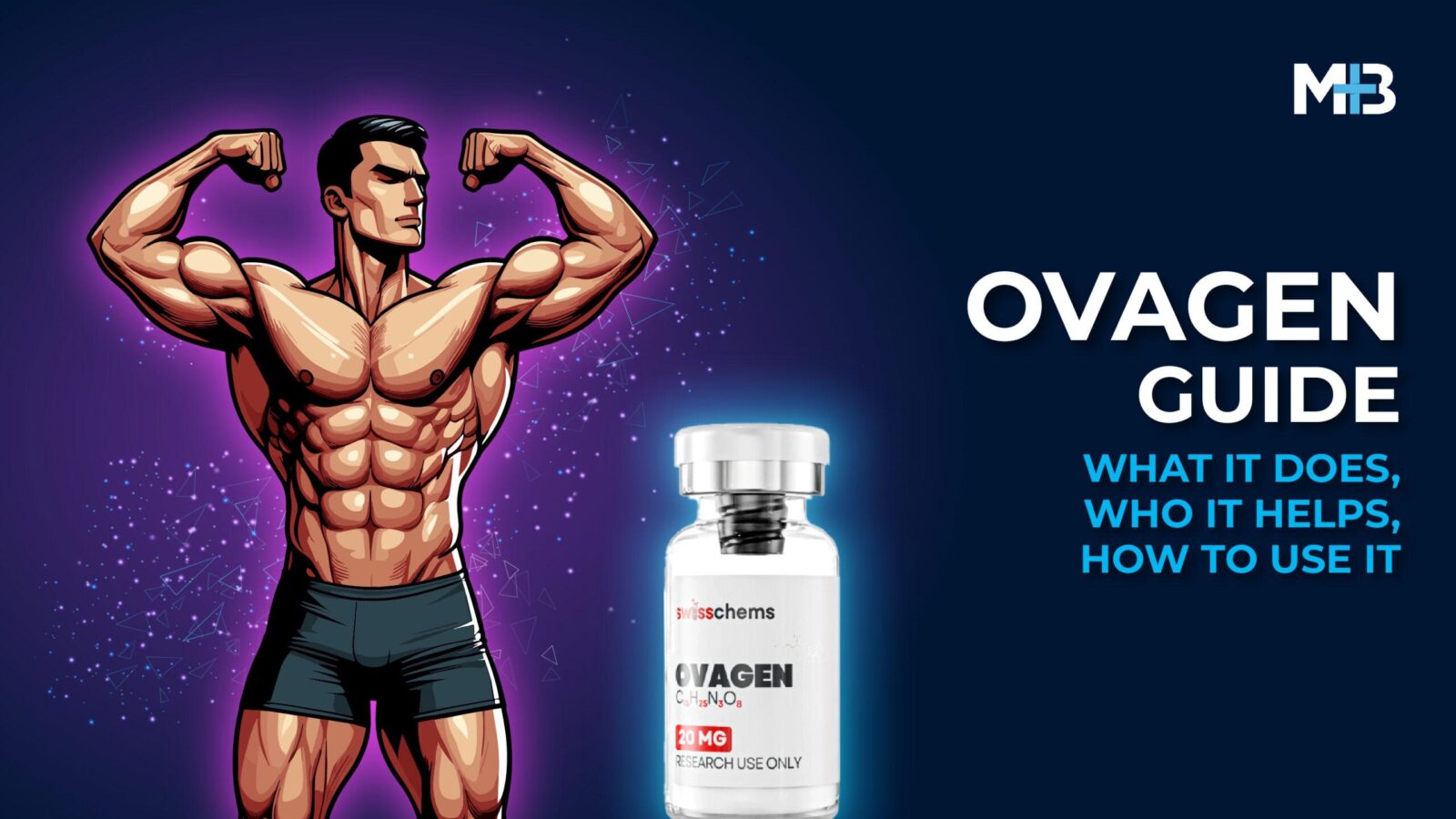
Ovagen is a synthetic tripeptide bioregulator consisting of three amino acids: glutamic acid, aspartic acid, and leucine. It was developed at the St. Petersburg Institute of Bioregulation and Gerontology as part of a broader Russian research program on ultrashort regulatory peptides. Ovagen targets liver and gastrointestinal tissue, where it is theorized to support cellular repair by influencing gene expression patterns.
Unlike conventional liver supplements that work through antioxidant or anti-inflammatory pathways, the Ovagen peptide belongs to a class of bioregulators designed to interact with cells at the transcriptional level. This approach is based on decades of Eastern European peptide research, though large-scale Western clinical trials have not been conducted. Most evidence comes from preclinical studies and clinical use within Russian and Eastern European medical practice.
The information on this site is for educational and informational purposes only, and is not medical advice. Always consult a qualified healthcare professional before using any supplement or medication, or making changes to your health, fitness, or nutrition routine.
Key Takeaways
- Ovagen is a tripeptide bioregulator (Glu-Asp-Leu) targeting liver and gastrointestinal tissue repair.
- It was developed at the St. Petersburg Institute of Bioregulation and Gerontology through decades of Russian peptide research.
- The proposed mechanism involves influencing gene expression to support cellular repair and normalize liver function.
- Available in oral capsule, injectable, and sublingual forms. Oral capsules are the most common.
- Large-scale clinical trials are limited. Most evidence comes from preclinical studies and Eastern European clinical practice.
What Is Ovagen?
Ovagen is classified as an ultrashort regulatory peptide — a synthetic chain of three amino acids designed to target specific organ systems. Its chemical formula is C15H25N3O8, with a molecular weight of 375.37 g/mol. The compound was created as a cytogen (synthesized peptide) rather than extracted from animal tissue, distinguishing it from earlier-generation bioregulators like Hepatamin.
The peptide’s small size allows it to use peptide transporters (PepT1/PepT2) in the gut and cell membranes for absorption, which contributes to its bioavailability across different administration routes. Once inside cells, short peptides like Ovagen are theorized to reach the nucleus and interact with DNA and chromatin proteins, adjusting gene expression toward patterns associated with repair and balanced metabolism.
How Ovagen Works
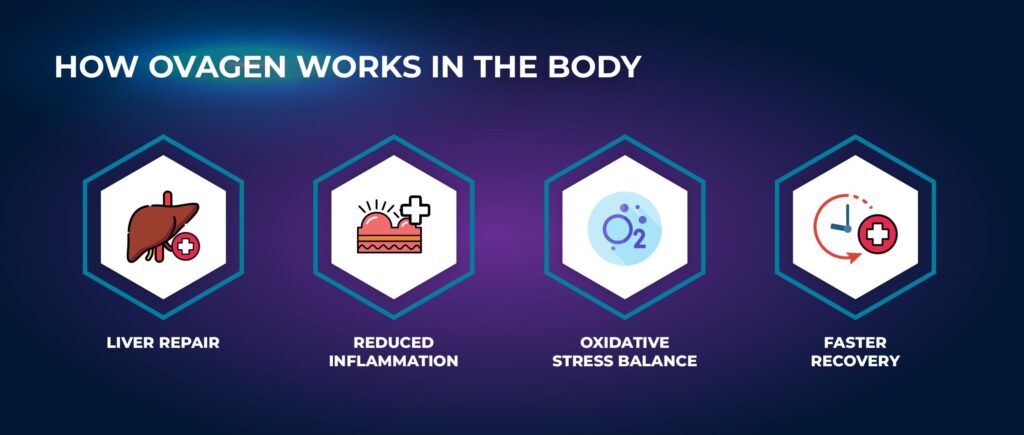
The proposed mechanism of action involves three stages:
- Cell entry: The tripeptide passes through peptide transporters in the gut lining and cell membranes due to its small size.
- Nuclear interaction: Once inside the cell, the peptide may interact with chromatin structure and transcription factors in the nucleus.
- Gene expression modulation: This interaction is proposed to shift gene expression toward repair-associated patterns — increasing production of detoxification enzymes, structural proteins, and antioxidant defenses.
This mechanism remains theoretical at the molecular level. While the downstream effects (improved liver markers, reduced fibrosis indicators) have been observed in preclinical models, the precise nuclear interactions are not fully characterized.
Ovagen Benefits
Liver Tissue Support
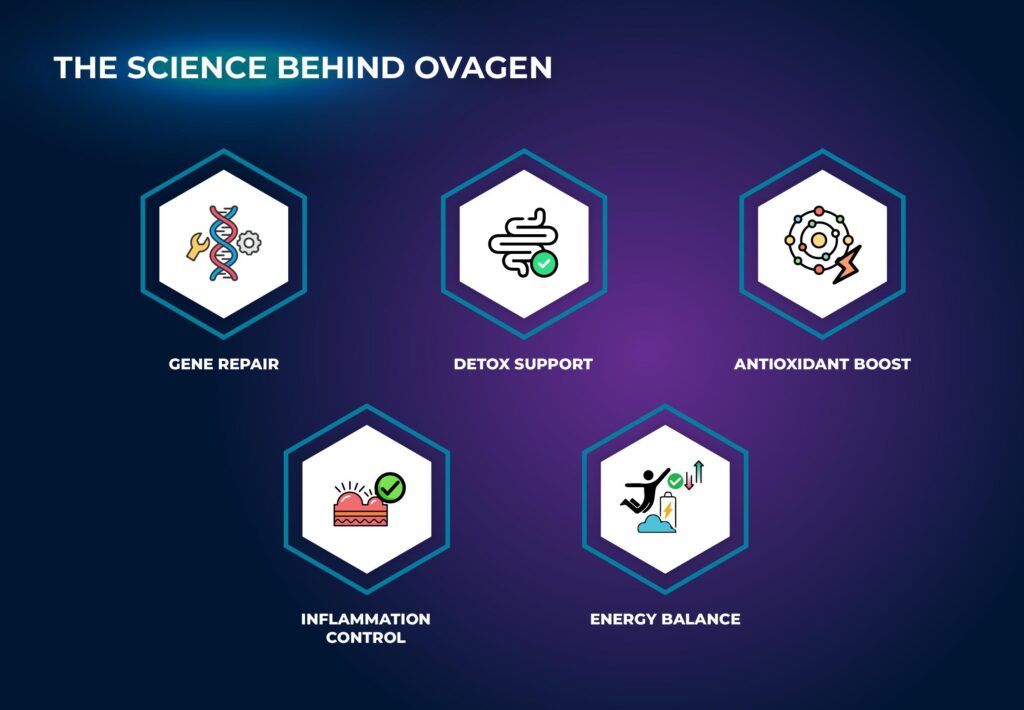
The primary Ovagen benefit is support for liver repair after stress from alcohol, medications, environmental toxins, or intensive training. The peptide is designed to help the liver reactivate repair programs involving detoxification enzyme production and cell renewal. Users of oral steroids or other hepatotoxic compounds may find liver bioregulators relevant as part of a broader health management protocol.
Anti-Inflammatory and Antioxidant Effects
Ultrashort peptides have demonstrated the ability to modulate inflammatory signaling and support antioxidant defenses in preclinical studies. By reducing pro-inflammatory cytokine activity and limiting reactive oxygen species, Ovagen may create conditions favorable for tissue repair rather than scarring (fibrosis).
Gastrointestinal Support
Ovagen’s targeting extends beyond the liver to the gastrointestinal tract. The peptide may support mucosal integrity and gut lining repair, which is relevant for athletes and individuals with digestive stress from intensive training, high-protein diets, or NSAID use.
Recovery and Performance Context
A well-functioning liver supports hormone metabolism, nutrient processing, protein synthesis, and energy production. By supporting hepatic function, Ovagen may indirectly contribute to better recovery, more stable energy levels, and improved training capacity. However, direct performance enhancement claims are not supported by controlled human studies.
Ovagen Dosage
Standard Protocols
| Form | Intensive Phase | Maintenance Phase |
|---|---|---|
| Oral capsules | 2 capsules daily for 30 days | 2 capsules daily for 10 days every 3 months |
| Injectable (SubQ) | 20 units before bed for 20 days | 10 days every 3-6 months |
| Sublingual | Per brand directions | Limited published data |
Protocol Guidelines
- Oral capsules are the most practical form for most users. Onset is slower than injectable but requires no special technique.
- Injectable preparations offer higher bioavailability but require sterile technique and proper peptide injection procedure. Reconstitute with bacteriostatic water and store refrigerated.
- Cycle structure: The intensive phase addresses active liver stress or repair needs. The maintenance phase preserves gains between intensive cycles.
- Lab monitoring: Track liver enzymes (ALT, AST, GGT, bilirubin) before and after each cycle to confirm the protocol is working and detect any issues.
Ovagen Stacking
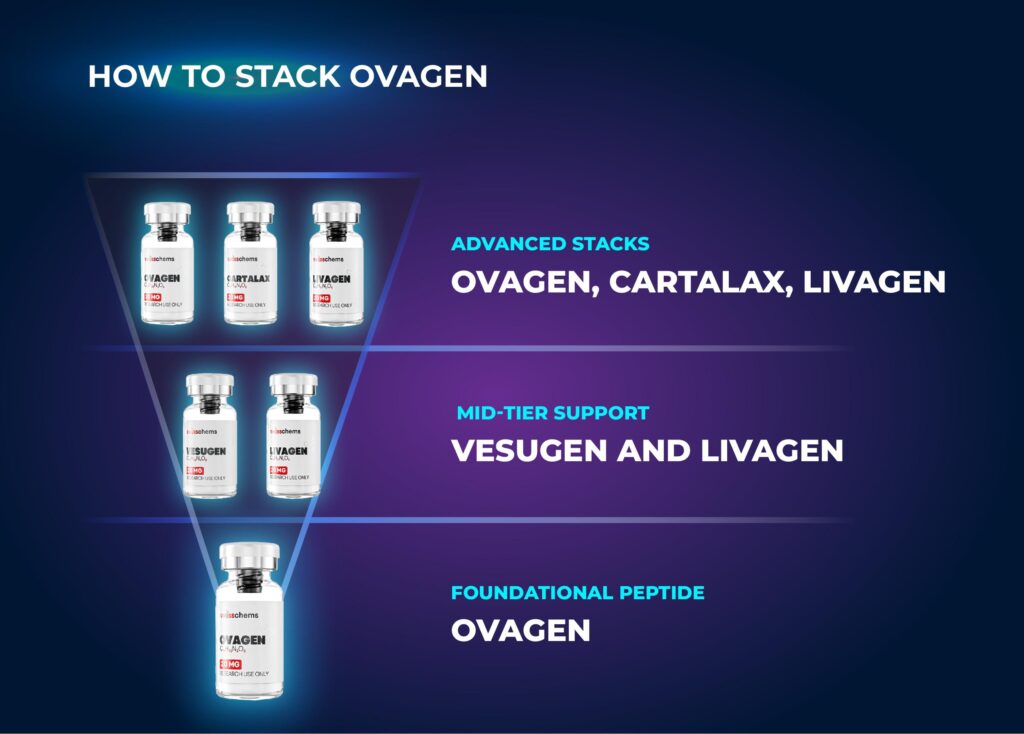
Bioregulator peptides are often used in organ-specific stacks. Ovagen pairs with other bioregulators targeting complementary systems.
Common Stacks
| Stack Focus | Components | Duration |
|---|---|---|
| Liver-focused | Ovagen + Vesugen (circulation) | 20 days, 2 daily doses |
| Longevity stack | Ovagen + Cartalax + Livagen | 20-30 days, repeat every 3-6 months |
| Recovery stack | Ovagen + BPC-157 (gut repair) | 20-30 days |
Vesugen and Ventfort target microcirculation, complementing Ovagen’s liver-specific effects. Livagen is a liver-focused bioregulator that may amplify hepatic repair when combined with Ovagen. Epitalon targets general aging pathways through telomerase activation, offering broader longevity support alongside Ovagen’s organ-specific approach.
Ovagen Side Effects
Ovagen has a favorable safety profile based on decades of use in Eastern European clinical practice, though large-scale Western-standard clinical trials are lacking.
Reported Side Effects
| Side Effect | Severity | Frequency |
|---|---|---|
| Mild digestive discomfort | Mild | Occasional (first few days) |
| Temporary fatigue | Mild | Rare (week 1) |
| Sleep changes | Mild | Rare (week 1) |
Safety Considerations
- Low immunogenic risk: The peptide’s small, natural amino acid sequence minimizes the risk of immune reactions.
- No stimulant effects: Ovagen is designed to normalize function rather than force a stimulatory response.
- Contraindications: Individuals with severe liver disease should consult a healthcare provider before use. Avoid during pregnancy or breastfeeding due to limited safety data. Those with known peptide allergies should use only under medical guidance.
The Bottom Line
The Ovagen peptide offers a more targeted approach than general liver supplements, and its safety profile appears favorable based on decades of Eastern European clinical use.
- Ovagen occupies a specific niche in the peptide landscape as an organ-targeted bioregulator designed to support liver and gastrointestinal repair at the transcriptional level.
- While the theoretical mechanism is plausible and preclinical data is supportive, large-scale controlled human trials meeting Western regulatory standards have not been published.
- Users should approach the Ovagen dosage protocols with realistic expectations, monitor liver markers with blood work, and source pharmaceutical-grade products from reputable vendors.
Frequently Asked Questions
Disclaimer
Please read carefully
The information on this site is for educational and informational purposes only, and is not medical advice. Always consult a qualified healthcare professional before using any supplement or medication, or making changes to your health, fitness, or nutrition routine.
Not medical advice
Content here is not a substitute for professional medical advice.
Consult your doctor
Talk to your doctor before starting any supplement or new routine.
Use at your own risk
We are not responsible for adverse effects from acting on this.
Do your research
Make informed decisions about your own health.
No guarantees
Individual results vary. No claims about outcomes.
Important — Never disregard professional medical advice or delay seeking it because of something you read here. If you think you may have a medical emergency, call your doctor or your local emergency number right away.