Contents11 sections
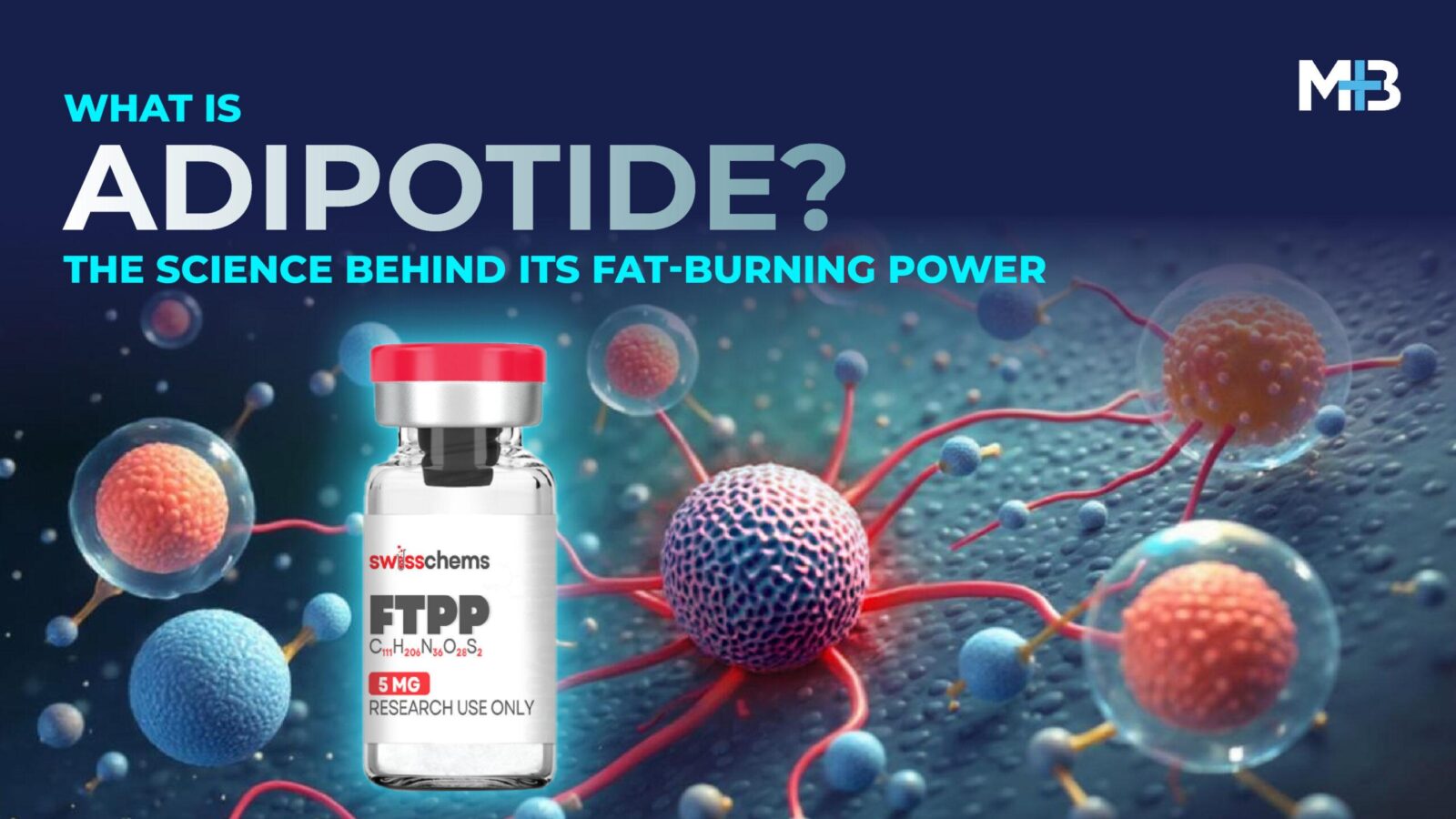
Adipotide (FTPP) is an experimental fat-loss peptide that works by destroying the blood vessels that feed white adipose tissue. Unlike most fat-loss compounds that alter hormones or metabolism, Adipotide uses a vascular-targeting mechanism to cut off blood supply to fat cells, causing them to shrink and die. Preclinical studies on obese rhesus monkeys showed up to 11% body weight loss in four weeks, with improvements in insulin sensitivity.
This FTPP peptide remains strictly experimental. There are no completed human clinical trials, no FDA approval, and significant safety concerns around kidney function. Adipotide is available only as a research chemical and should not be used without medical supervision. That said, its mechanism represents a fundamentally different approach to fat reduction that has drawn attention from both obesity researchers and the broader peptides community.
Key Takeaways
- Adipotide (FTPP) targets the blood vessels feeding white adipose tissue, causing fat cells to die through apoptosis rather than altering hormones or metabolism.
- Preclinical studies on obese rhesus monkeys showed approximately 11% body weight reduction in four weeks, with concurrent improvements in insulin sensitivity.
- The peptide has no completed human clinical trials and is not FDA-approved. All efficacy data comes from animal models.
- Kidney function changes were observed in animal studies, making renal monitoring essential in any research context.
- Adipotide is distinct from hormonal fat-loss peptides like AOD-9604, Tesamorelin, and CJC-1295/Ipamorelin, which work through metabolic or growth hormone pathways.
What Is Adipotide?
Adipotide, also known as FTPP (Fat-Targeted Proapoptotic Peptide), is a synthetic experimental peptide designed for body fat reduction by acting directly on the blood vessels that supply fat tissue. It was developed by researchers at the MD Anderson Cancer Center and the Barshop Institute for Longevity and Aging Studies.
The peptide’s structure combines two functional sequences:
- A targeting sequence (CKGGRAKDC) that binds specifically to prohibitin, a receptor found on the blood vessels supplying white adipose tissue.
- A pro-apoptotic sequence ((D)(KLAKLAK)2) that triggers programmed cell death (apoptosis) once the peptide has attached to these vessels.
This dual-action design means Adipotide first locates the blood vessels feeding fat deposits, then delivers a signal that causes those vessels to self-destruct. As the blood supply is cut off, the fat cells are deprived of oxygen and nutrients, leading to their gradual breakdown and clearance through the body’s natural waste processes.
Unlike conventional fat-loss approaches (caloric restriction, stimulants, or hormone optimization), Adipotide does not require changes in diet, exercise, or hormonal balance to produce fat reduction in animal models. This non-hormonal mechanism is what makes the Adipotide peptide unique among fat-loss research compounds.
How Adipotide Works: Mechanism of Action
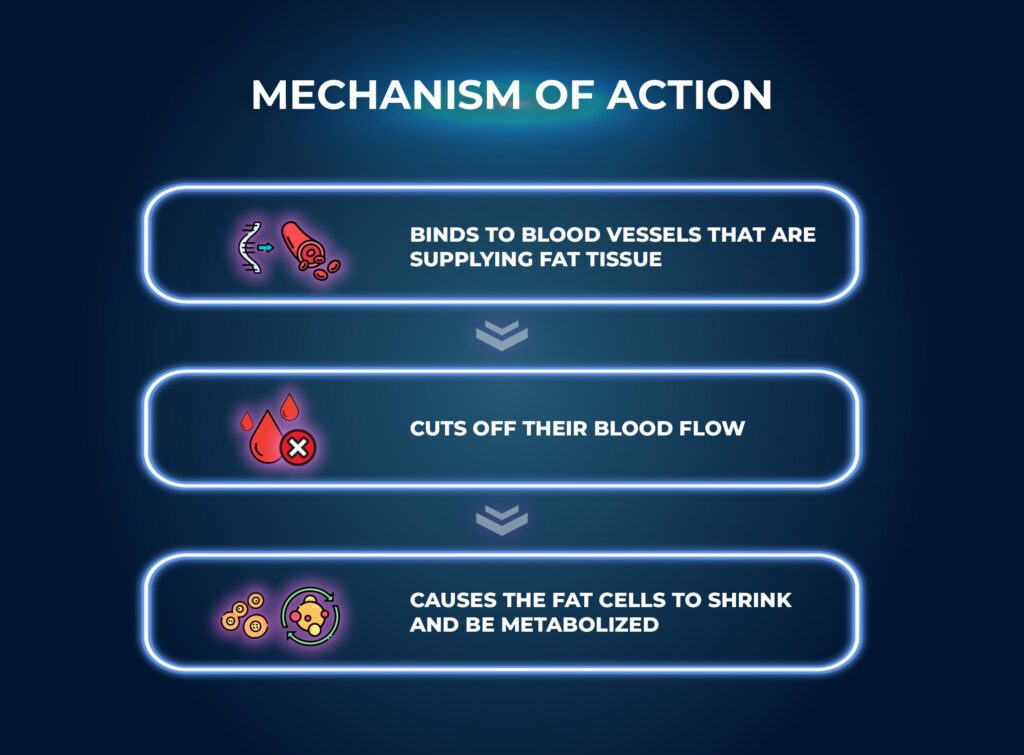
The Adipotide fat loss mechanism operates through vascular disruption rather than metabolic or hormonal pathways. Here is the step-by-step process:
Step 1: Vascular Targeting
The CKGGRAKDC sequence in this FTPP peptide acts as a homing device. It circulates through the bloodstream and selectively binds to prohibitin receptors on the endothelial cells lining blood vessels that supply white adipose tissue. This targeting is specific to fat tissue vasculature and does not bind to blood vessels feeding muscle, organs, or other tissues in significant quantities.
Step 2: Apoptosis Induction
Once Adipotide has docked onto the fat-tissue blood vessels, the (D)(KLAKLAK)2 sequence is delivered directly into the endothelial cells. This sequence disrupts mitochondrial membranes within those cells, triggering apoptosis (programmed cell death). The blood vessels feeding the fat tissue collapse and cease to function.
Step 3: Fat Cell Destruction and Clearance
With their blood supply cut off, the fat cells (adipocytes) within the affected tissue are starved of oxygen and nutrients. Fat cell destruction begins as they die and are gradually cleared by the body’s immune system through phagocytosis, the same process the body uses to clear any dead or damaged cells.
Step 4: Metabolic Clearance
The dead fat tissue and cellular debris are processed by the liver and kidneys and excreted. This clearance phase is why kidney function monitoring is particularly relevant in Adipotide research, as the increased metabolic load from tissue breakdown places additional stress on renal filtration.
Adipotide Research Results
Rhesus Monkey Study
The most significant Adipotide results come from the study conducted by Kolonin et al. (2011) at the MD Anderson Cancer Center. Key findings from this preclinical trial on obese rhesus monkeys:
| Measure | Result |
|---|---|
| Body weight reduction | ~11% decrease over 4 weeks |
| BMI change | Significant decrease from baseline |
| Abdominal circumference | Measurable reduction |
| Insulin sensitivity | Improved (measured via HOMA-IR) |
| Treatment duration | 28 days of daily subcutaneous injection |
| Renal effects | Temporary changes in kidney function markers |
| Recovery | Kidney markers returned to baseline after discontinuation |
The monkeys in this study did not have their diet or activity levels modified. These body composition improvements occurred purely through the vascular-targeting mechanism, suggesting the compound’s effects are independent of caloric balance.
Limitations of Current Research
Several factors limit the applicability of these results:
- No completed human trials: All efficacy data comes from animal models. Human pharmacokinetics, dosing, and safety profiles have not been established.
- Small sample sizes: Preclinical studies used limited numbers of subjects.
- Short duration: The longest published study was 28 days. Long-term effects, including whether fat returns after discontinuation, are unknown.
- Kidney concerns: While kidney markers normalized after stopping treatment, the mechanism raises questions about cumulative renal stress with repeated or prolonged use.
- Selectivity questions: While Adipotide preferentially targets fat tissue vasculature, complete selectivity has not been demonstrated. Off-target vascular effects remain a theoretical concern.
Adipotide Dosage (Research Context)
There is no established human dosage for the Adipotide peptide. The following information comes from animal research protocols and should not be interpreted as dosing guidance for human use.
Animal Research Dosing
| Parameter | Detail |
|---|---|
| Species | Rhesus monkeys (obese) |
| Route | Subcutaneous injection |
| Dose range | 0.5-1.0 mg/kg body weight |
| Frequency | Daily |
| Duration | Up to 28 days |
| Cycle pattern | Not established (single study period) |
Research Community Observations
Among those who have experimented with Adipotide outside of clinical settings, commonly reported protocols include:
- Doses of 0.5 mg/day or lower, significantly below the per-kg doses used in primate studies
- Cycle lengths of 2-4 weeks followed by extended breaks
- Concurrent kidney function monitoring (creatinine, BUN, GFR)
- Adequate hydration (3-4 liters daily) to support renal clearance
These are anecdotal reports, not validated clinical protocols. The lack of human pharmacokinetic data means appropriate dosing, if any, has not been determined.
Benefits of Adipotide (Observed in Research)
Direct Fat Reduction
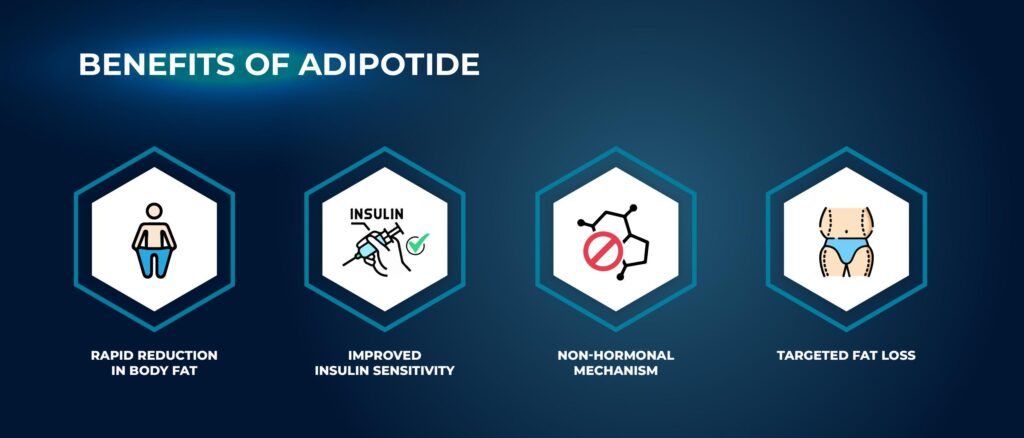
Adipotide reduces fat tissue by destroying its blood supply rather than relying on metabolic changes. In animal models, Adipotide fat loss occurred without dietary modification, exercise changes, or hormonal intervention.
Targeted Action on White Adipose Tissue
The targeting peptide sequence binds preferentially to blood vessels in white adipose tissue, the type responsible for energy storage and the “stubborn” fat deposits that resist diet and exercise. This selectivity, while not absolute, means the compound’s effects concentrate on fat tissue rather than acting systemically.
Improved Insulin Sensitivity
Rhesus monkeys treated with Adipotide showed improved insulin sensitivity alongside fat loss. This suggests potential metabolic benefits beyond simple weight reduction, though the direction of causality (did fat loss cause improved insulin sensitivity, or did Adipotide have independent metabolic effects?) has not been established.
Non-Hormonal Mechanism
Unlike most fat-loss peptides that work through growth hormone, thyroid hormone, or metabolic pathways, Adipotide does not alter the endocrine system. This eliminates the hormonal side effects (cortisol elevation, thyroid suppression, pituitary feedback disruption) associated with many other fat-loss compounds.
Adipotide Safety Profile and Side Effects
Observed in Animal Studies
- Kidney function changes: The most significant safety concern. Temporary elevations in creatinine and BUN were observed, indicating increased renal workload. These markers returned to baseline after treatment cessation, but the effect raises questions about cumulative damage with repeated cycles.
- Dehydration tendency: Animals showed signs of mild dehydration during treatment, likely related to increased metabolic clearance of cellular debris.
- Fatigue: Temporary lethargy was noted in some subjects during the treatment period.
- Tissue inflammation: Localized inflammation at the injection site and in areas of active fat-tissue breakdown was observed.
Theoretical Concerns
- Off-target vascular effects: While the targeting sequence preferentially binds to fat-tissue vasculature, prohibitin receptors exist in other tissues. The degree of off-target binding and its consequences in humans are unknown.
- Renal toxicity with chronic use: The kidney stress observed in short-term studies could compound with repeated or prolonged use, potentially leading to renal damage.
- Immune response: Repeated injection of a synthetic peptide could trigger immune sensitization or allergic reactions over time.
- Fat regain: Whether adipose tissue vasculature regenerates after Adipotide treatment, allowing fat to return, has not been studied long-term.
Monitoring Recommendations (Research Context)
Anyone involved in Adipotide research should monitor:
| Test | Frequency | Action Threshold |
|---|---|---|
| Serum creatinine | Weekly during use | >1.3 mg/dL: discontinue |
| Blood urea nitrogen (BUN) | Weekly during use | >25 mg/dL: reduce dose |
| Estimated GFR | Before and after cycle | <60 mL/min: do not use |
| Urinalysis | Weekly | Proteinuria: discontinue |
| Complete metabolic panel | Before and 2 weeks after cycle | Review with physician |
Adipotide vs. Other Fat-Loss Peptides
Adipotide vs. AOD-9604
| Feature | Adipotide (FTPP) | AOD-9604 |
|---|---|---|
| Mechanism | Destroys blood vessels feeding fat cells | Stimulates lipolysis, inhibits lipogenesis |
| Pathway | Vascular (non-hormonal) | Growth hormone fragment (metabolic) |
| Human data | None (animal studies only) | Limited human trial data available |
| FDA status | Not approved | Not FDA-approved but has TGA listing in Australia |
| Side effects | Kidney stress, dehydration | Generally mild (headache, injection site reactions) |
| Fat loss pattern | Rapid, targeted destruction | Gradual metabolic fat burning |
| Best for | Research into vascular-targeted fat reduction | Users seeking mild, low-risk fat loss support |
Adipotide vs. CJC-1295 + Ipamorelin
The Adipotide fat loss mechanism directly destroys fat tissue through vascular apoptosis, while CJC-1295 and Ipamorelin enhance the body’s natural growth hormone production to improve fat metabolism, lean muscle gain, and recovery over time. The CJC-1295/Ipamorelin stack is widely used in clinical peptide therapy with established safety data, while Adipotide remains experimental with no human safety profile.
The two approaches are fundamentally different: Adipotide eliminates existing fat tissue, while CJC-1295/Ipamorelin helps the body burn fat more efficiently through hormonal optimization.
Adipotide vs. Tesamorelin
Tesamorelin is an FDA-approved GHRH analog that reduces visceral fat by stimulating growth hormone release. It has completed clinical trials, has an established safety profile, and is prescribed for HIV-associated lipodystrophy. Adipotide, by contrast, has no completed human trials and no regulatory approval.
Both compounds can target visceral and abdominal fat, but Tesamorelin does so through hormonal pathways with validated dosing and monitoring protocols. For anyone outside a pure research context, Tesamorelin is the evidence-based choice for growth hormone-mediated fat reduction.
Comparison Summary
| Feature | Adipotide | AOD-9604 | CJC-1295/Ipamorelin | Tesamorelin |
|---|---|---|---|---|
| Mechanism | Vascular apoptosis | GH fragment (lipolysis) | GH secretagogue | GHRH analog |
| Human trials | None | Limited | Yes | Yes (FDA-approved) |
| Safety profile | Unknown in humans | Favorable | Well-established | Well-established |
| Fat loss speed | Rapid (animal data) | Moderate | Gradual | Moderate |
| Hormonal impact | None | Minimal | Increases GH | Increases GH |
| Kidney risk | Yes | No | No | No |
| Availability | Research chemical only | Research chemical | Research chemical or prescribed | Prescription only |
The Bottom Line
Adipotide represents a genuinely novel approach to fat reduction. Instead of tweaking hormones or speeding up metabolism, this FTPP peptide goes after the blood vessels that keep fat tissue alive.
- The primate data showing 11% body weight loss in 28 days without dietary changes is compelling, and the non-hormonal mechanism avoids the endocrine side effects that come with most fat-loss peptides.
- That said, Adipotide is nowhere near ready for real-world use. Zero completed human trials, unknown long-term kidney effects, and no regulatory approval anywhere in the world make this a compound to watch rather than use.
- If you are looking for fat-loss peptides with actual human safety data, CJC-1295 paired with Ipamorelin offers a well-studied option, and FDA-approved Tesamorelin remains the gold standard for growth hormone-mediated fat reduction.
Frequently Asked Questions
Disclaimer
Please read carefully
The information on this site is for educational and informational purposes only, and is not medical advice. Always consult a qualified healthcare professional before using any supplement or medication, or making changes to your health, fitness, or nutrition routine.
Not medical advice
Content here is not a substitute for professional medical advice.
Consult your doctor
Talk to your doctor before starting any supplement or new routine.
Use at your own risk
We are not responsible for adverse effects from acting on this.
Do your research
Make informed decisions about your own health.
No guarantees
Individual results vary. No claims about outcomes.
Important — Never disregard professional medical advice or delay seeking it because of something you read here. If you think you may have a medical emergency, call your doctor or your local emergency number right away.